Malt Extract Storage: How to Keep It Fresh and Fight Spoilage
When you buy malt extract, a concentrated syrup made from mashed grains, used as the base for homebrewed beer. Also known as liquid malt extract or LME, it’s the backbone of many beginner and advanced brewing recipes. But if you don’t store it right, it can go bad—darken, ferment on its own, or grow mold. That’s not just a waste of money; it can ruin your whole batch. The good news? Proper malt extract storage is simple, and it makes a huge difference.
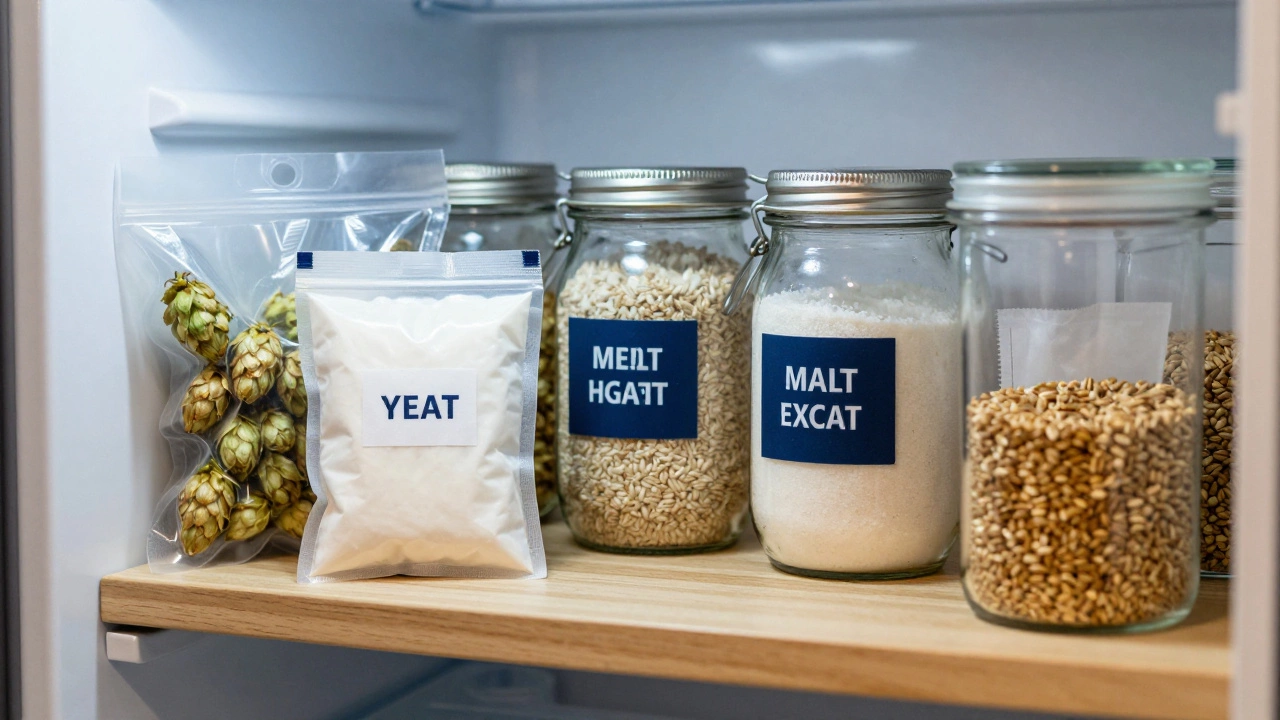
Malt extract comes in two main forms: liquid and dry. Liquid malt extract is thick, sticky, and prone to oxidation and microbial growth if left open. Dry malt extract (DME) is powdered and lasts longer, but it still absorbs moisture like a sponge. Both types hate heat, light, and air. Store them in a cool, dark place—like a pantry or basement—away from your stove or windows. Never leave an open container on the counter. If you’ve opened a can or bottle of liquid extract, transfer it to a clean, airtight glass or food-grade plastic container. Seal it tight, label it with the date, and stick it in the fridge. Cold slows down spoilage. Some brewers even freeze it in portions to keep it fresh for over a year.
Dry malt extract is easier to handle. Keep it in its original sealed bag inside a plastic bin with a tight lid. Add a food-safe desiccant packet if you live in a humid area. Moisture is its worst enemy—it turns DME into a clumpy, unusable mess. If you notice lumps, discoloration, or a sour smell, toss it. You don’t want wild yeast or bacteria in your beer. Always check the expiration date, but remember: even unopened malt extract can degrade over time. The best ones are used within 6 to 12 months of purchase. Older extract might still work, but it’ll darken your beer and add unwanted caramel or burnt flavors.
Think of malt extract like fresh fruit—once it’s processed, it starts losing quality. The same rules apply: seal it, chill it, and use it fast. Whether you’re brewing a light lager or a dark stout, the quality of your base ingredient sets the tone. Get storage right, and you’ll notice cleaner flavors, better fermentation, and fewer headaches. Below, you’ll find real-world advice from brewers who’ve learned these lessons the hard way—no guesswork, just what works.





Categories