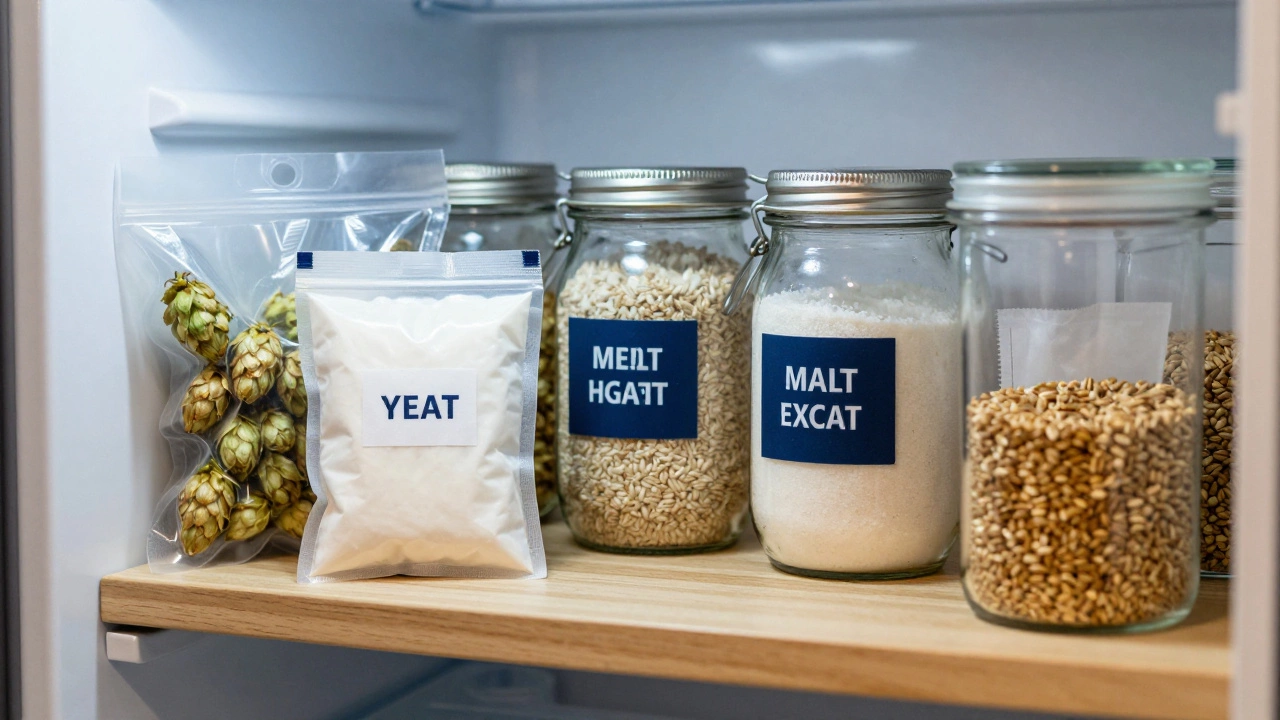
Most beer making kits come with a printed expiration date - usually one year from the manufacturing date. But that date isn’t a hard stop. It’s more like a warning label. If you’ve got an old kit tucked away in the closet, you’re probably wondering: Can I still brew with it? The answer isn’t simple. It depends on what’s inside, how it was stored, and which ingredients are still alive.
What’s Actually in a Beer Making Kit?
A typical beer kit includes four core ingredients: malt, hops, yeast, and sometimes specialty additives like Irish moss or brewing salts. Each one has its own lifespan. The kit’s overall shelf life is only as good as its weakest component.Let’s break it down.
- Malt - Comes as either liquid extract (syrup in a can) or dry extract (powder). Liquid malt extract can last 12-18 months if sealed and kept cool. Once opened, it starts oxidizing. After three months, it can taste stale - like wet cardboard or old sherry. Dry malt extract lasts longer - up to 18 months - as long as it stays dry. Moisture turns it into a gluey mess.
- Hops - These are the most sensitive. Fresh hops have alpha acids that give beer bitterness and aroma. If they’re exposed to air, heat, or light, those acids break down fast. Vacuum-sealed and frozen, hops can last a full year. In the fridge? Maybe six months. On the shelf? You’ll notice flat, grassy flavors after three months.
- Yeast - This is where things get tricky. Dry yeast packets are tough. They can sit at room temperature for 18-24 months and still work fine. Liquid yeast, though? It’s fragile. Every month, it loses about 20% of its cells. After six months, half of it is dead. Even if it looks fine, it might take days to start fermenting - or not at all.
- Grains - If your kit includes whole malted grains (not crushed), they can last 12-18 months if kept sealed and dry. Crushed grains? That’s a different story. Once crushed, the surface area explodes. Oxygen gets in. Mold grows. Enzymes die. Use them within 2-3 weeks, or at most 3 months if frozen.
Storage Makes All the Difference
A kit stored in a hot garage won’t last half as long as one kept in a cool, dark cupboard. Temperature and moisture are the two biggest enemies.Here’s what actually works:
- Yeast - Dry yeast? Leave it on the shelf. Liquid yeast? Put it in the fridge. Don’t freeze it - that kills the cells. If you’re using liquid yeast older than four months, make a starter. Pitching a healthy starter can revive a tired batch.
- Hops - If you’re not using them right away, toss them in the freezer. Use a zip-top bag with all the air squeezed out. Add an oxygen absorber if you’ve got one. Hops stored this way can stay fresh for 18 months.
- Malt extract - Once you open a can of liquid malt, pour it into a clean glass jar. Seal it tight. Refrigerate. Plastic containers let oxygen in. Glass doesn’t. This simple switch can extend usability by another month or two.
- Grains - Whole grains? Store them in an airtight container with silica gel packs. Crushed grains? Use them fast. If you’ve got leftover crushed grain, freeze it. It won’t last forever, but it’ll buy you a few extra weeks.
One brewer in Edinburgh told me he kept a kit for 16 months in his basement. The malt was fine. The hops were a little flat. The dry yeast worked perfectly. He used a starter for the liquid yeast - and brewed a solid IPA. No off-flavors. No stuck fermentation. Just good beer.
How to Tell If Your Kit Is Still Good
You don’t need a lab to test your ingredients. Here’s how to check at home:- Yeast - For liquid yeast: Shake the vial. If it’s flat, smells like vinegar, or has mold on top - toss it. For dry yeast: Pour a pinch into warm water. If it foams up within 15 minutes, it’s alive. No foam? Dead.
- Malt extract - Smell it. Fresh liquid malt smells sweet, like caramel or toffee. Old malt smells sour, musty, or like wet paper. Taste a drop. If it’s bitter or flat, it’s oxidized.
- Hops - Crush a small amount between your fingers. Smell it. Fresh hops smell piney, citrusy, or floral. Old hops smell like hay, grass, or nothing at all.
- Grains - Smell them. Fresh grain smells like bread or toasted nuts. If they smell musty, sour, or like cardboard, they’re done. Look for white fuzz - that’s mold.
One red flag: if your kit has been sitting in direct sunlight or a damp basement, throw it out. No amount of testing will save it.
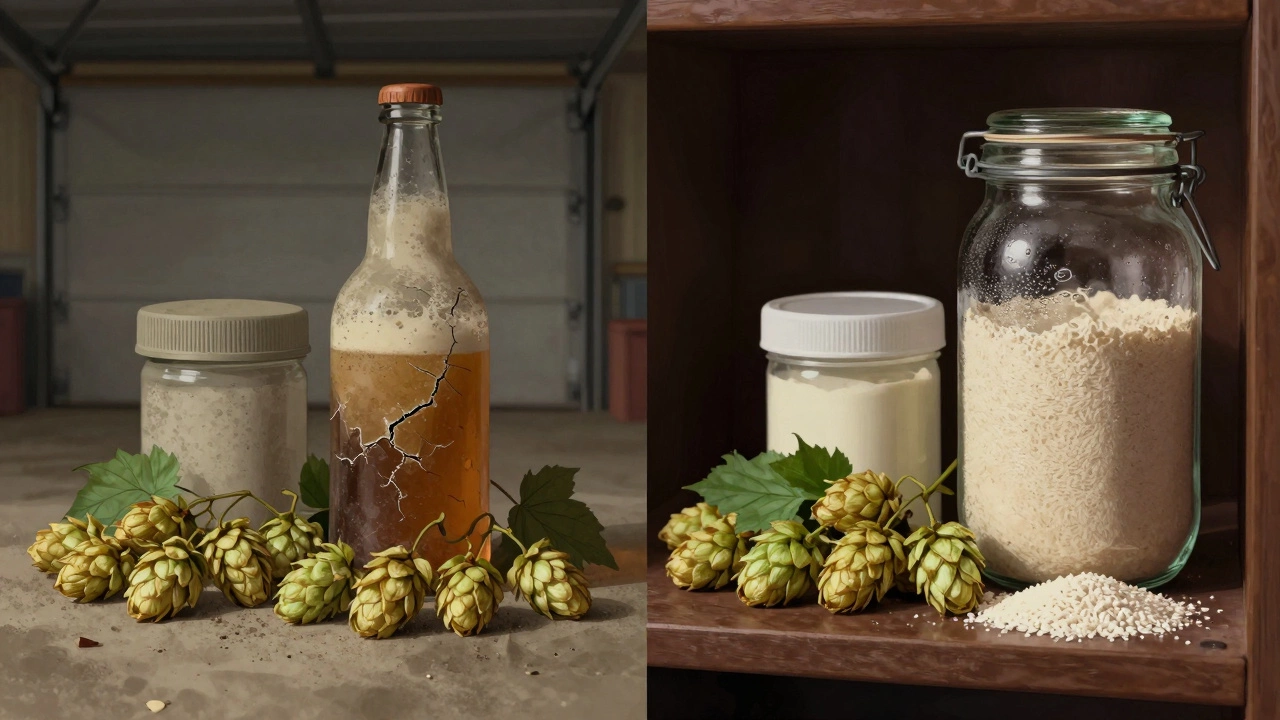
What Happens When You Use Old Ingredients?
You might still get beer. But it won’t be good beer.Old yeast leads to slow or incomplete fermentation. Your beer might be sweet, under-carbonated, or smell like rotten fruit. That’s not flavor - that’s contamination.
Old hops mean your IPA tastes like weak tea. No bitterness. No aroma. Just flatness.
Old malt extract adds dull, caramelized sweetness - not the clean malt backbone you want. It can also make your beer darker than intended.
And crushed grains? They’ll make your beer taste like wet cardboard. That’s oxidation. It’s not fixable.
One Reddit user reported using a 14-month-old kit with dry yeast and whole grains. He got a clean, drinkable pale ale. Another used a 10-month-old kit with liquid yeast - fermentation didn’t start for 48 hours, and the final beer was 5% lower in alcohol than expected. That’s the difference between dry and liquid yeast.
Best Practices for Long-Term Kit Storage
If you buy kits in bulk or want to stock up for next season, here’s how to make them last:- Buy kits with dry yeast - they’re more forgiving.
- Choose kits with whole grains, not crushed.
- Store the entire kit in a cool, dark place - 50-70°F is ideal.
- Transfer opened liquid malt to a glass jar and refrigerate.
- Put hops in the freezer in vacuum-sealed bags.
- For liquid yeast older than 4 months, make a yeast starter before brewing.
- Label every kit with the purchase date - don’t rely on the manufacturer’s date.
Some premium kits now include expiration dates for each ingredient. Northern Brewer and Midwest Supplies have started doing this. If you see a date on the yeast packet, trust that over the kit’s overall date.
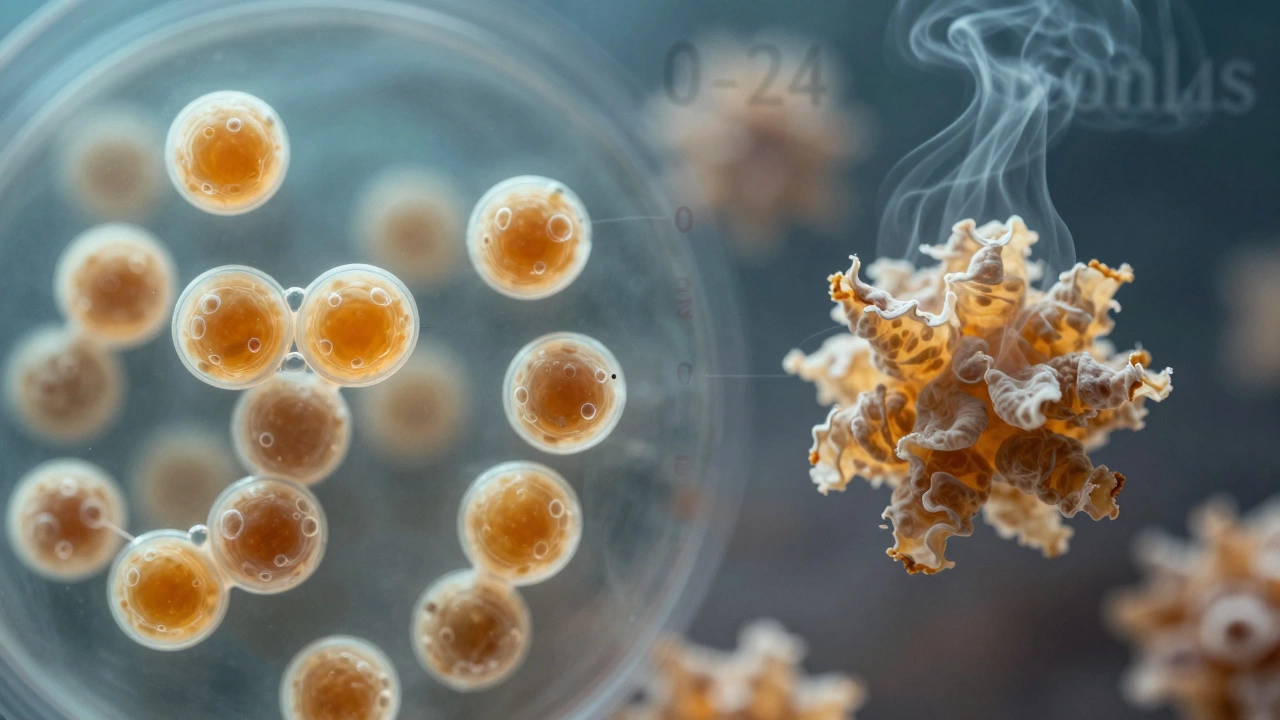
What’s New in 2025?
The homebrewing industry is catching on. In 2023, White Labs released CryoYeast - a liquid yeast formulation that lasts up to 9 months refrigerated. Midwest Supplies started selling vacuum-sealed whole grain kits with a 24-month shelf life. Northern Brewer switched to nitrogen-flushed hop packaging, which keeps hops fresh for 18 months in the freezer.These aren’t gimmicks. They’re responses to what brewers actually need: reliability. The old 12-month rule is fading. The future is ingredient-specific dating.
But here’s the truth: even with better packaging, yeast is still biological. It dies. Hops still oxidize. Malt still goes stale. You can’t cheat biology.
Should You Use an Old Kit?
If your kit is under 12 months old and stored properly - go ahead. You’re fine.If it’s 12-18 months old:
- Use dry yeast? Probably okay.
- Use liquid yeast? Make a starter.
- Whole grains? Still good.
- Crisp, hoppy beer? Maybe not.
If it’s older than 18 months - and you’re not sure - don’t risk it. Buy a new kit. A fresh one costs $25-$40. A ruined batch costs you time, money, and your confidence.
Homebrewing isn’t about saving a few bucks. It’s about making something you’re proud of. If your beer tastes off, you’ll remember it. If you brew a great one, you’ll remember that too.
Can I use a beer making kit that’s two years old?
It’s risky. Dry yeast might still work, and whole grains could be fine if stored properly. But liquid malt extract and hops will likely be oxidized, giving your beer stale, cardboard-like flavors. Liquid yeast is almost certainly dead after two years. If you try it, make a yeast starter and expect poor fermentation. Better to buy a new kit.
Does refrigerating a beer kit extend its shelf life?
Yes - but only for some parts. Refrigerating liquid malt extract and liquid yeast slows spoilage. It won’t help dry yeast or whole grains much. Freezing hops extends their life dramatically. But storing the whole kit in the fridge isn’t necessary unless you have liquid yeast or opened malt. A cool, dark cupboard works fine for most components.
Is dry yeast better than liquid yeast for long-term storage?
Absolutely. Dry yeast lasts 18-24 months at room temperature. Liquid yeast loses 20% of its viability every month and is only reliable for 4-6 months, even when refrigerated. If you’re planning ahead, choose kits with dry yeast. It’s more forgiving and easier to store.
What’s the best way to store hops for long-term use?
Freeze them. Put hops in a vacuum-sealed bag or a zip-top bag with all the air squeezed out. Add an oxygen absorber if you have one. Keep them in the freezer. This keeps their alpha acids intact for up to 18 months. Never store hops in the fridge long-term - they’ll still degrade.
Can I use crushed grains from an old kit?
Only if they’re less than 3 months old and stored in the freezer. Crushed grains start losing enzymes and oxidizing within weeks. After 4 months, they’ll give your beer a flat, cardboard taste. Whole grains last 12-18 months - crushed grains don’t. If your kit has crushed grains and it’s older than 4 months, replace them.
How do I know if my liquid yeast is still alive?
Shake the vial or pouch. Smell it - if it smells like vinegar, rotten fruit, or nothing at all, it’s dead. For a better test, mix a teaspoon of yeast with 100ml of warm (95°F) water and a pinch of sugar. Wait 15 minutes. If it foams up like soda, it’s alive. If it’s flat, pitch new yeast.
Are there kits with longer shelf lives available now?
Yes. Companies like Midwest Supplies now sell vacuum-sealed whole grain kits with 24-month shelf lives. Northern Brewer uses nitrogen-flushed hop packs that last 18 months in the freezer. White Labs’ CryoYeast lasts up to 9 months refrigerated. These are premium products, but they’re designed for brewers who plan ahead.
Next Steps: What to Do With Your Old Kit
If you’ve got an old kit and you’re not sure:- Check the date. If it’s under a year, you’re probably safe.
- Test the yeast. Use the warm water test.
- Smell the malt and hops. If they smell off, replace them.
- If it’s over 18 months old, or you’re unsure - buy a new kit. It’s cheaper than wasting a whole batch.
- Next time, store your ingredients properly. Keep yeast cold, hops frozen, malt sealed, and grains whole.
Beer making kits are convenient. But they’re not magic. They’re just ingredients. And ingredients have limits. Respect those limits, and your beer will thank you.





Categories