Hops Storage: How to Keep Your Beer Ingredients Fresh and Flavorful
When you're brewing beer at home, hops, the flower clusters used to add bitterness, aroma, and flavor to beer. Also known as beer hops, they're one of the four core ingredients—and the most sensitive to poor handling. If you store them wrong, you lose the citrus, pine, or floral notes you paid for. You don’t need fancy gear, but you do need to treat hops like fresh herbs, not shelf-stable spices.
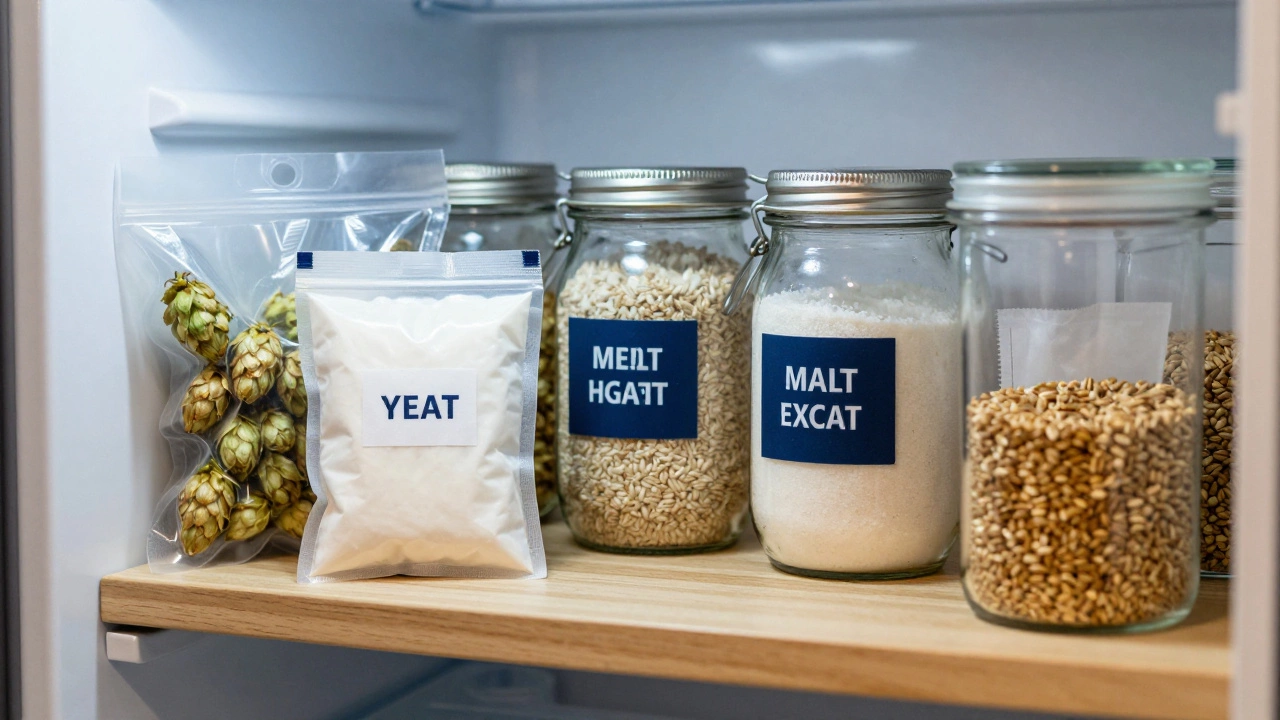
Hops degrade fast when exposed to air, light, and heat. Oxygen turns them papery and flat. UV light kills their essential oils. Even room temperature can ruin them in weeks. That’s why vacuum sealing, a method that removes air to slow oxidation is the gold standard. Freezing is just as important. Most brewers keep their hops in the freezer, sealed in zip-top bags with all the air pressed out. Some even use oxygen-absorbing packets. Don’t just toss them in the fridge—that’s not cold enough. And never leave them in their original packaging unless you’re using them within days.
Don’t forget about hop varieties, different types like Cascade, Citra, or Mosaic, each with unique flavor profiles. Some are more delicate than others. A high-alpha acid hop like Magnum might hold up better over time, but a fragrant hop like Amarillo? It fades fast. That’s why experienced brewers label everything: variety, date received, alpha acid percentage, and whether it’s whole leaf or pellet. Pellets last longer than whole cones, but both need the same cold, dark, airtight treatment.
When you open a sealed bag of hops, use what you need right away. Let the rest sit out? You’ve already started the decay clock. If your hops smell like cheese, grass, or old socks, they’re past their prime. Fresh hops should smell bright—like citrus rind, pine needles, or tropical fruit. That’s the flavor you’re trying to lock in. Good hops storage isn’t just about saving money—it’s about protecting the character of your beer. The difference between a dull pint and a vibrant one often comes down to how you treated the hops before they even hit the kettle.
What you’ll find below are real-world tips and lessons from brewers who’ve learned the hard way. From freezer hacks to packaging tricks, these posts show you exactly how to keep your ingredients alive so your beer tastes like it should—fresh, bold, and full of character.





Categories