Tea Brewing Calculator
Optimize Your Tea Experience
Get the perfect brew every time. Based on your tea type and water temperature, we'll calculate the ideal steeping time to avoid bitterness and maximize flavor.
Most people think they know how to drink tea. You boil water, toss in a bag or loose leaves, wait a few minutes, and sip. But if you’ve ever noticed a tea tasting flat, bitter, or just… boring-you’re not drinking it right. You’re not teasing out what’s really there. Tea isn’t just a warm drink. It’s a complex, layered experience-like wine, but quieter, more subtle, and deeply personal. Learning how to taste tea correctly changes everything. You’ll start noticing the difference between a tea that’s been handled with care and one that’s been rushed, overcooked, or stored poorly. And once you do, you’ll never go back to just pouring a cup without pausing first.
Start with the Dry Leaves
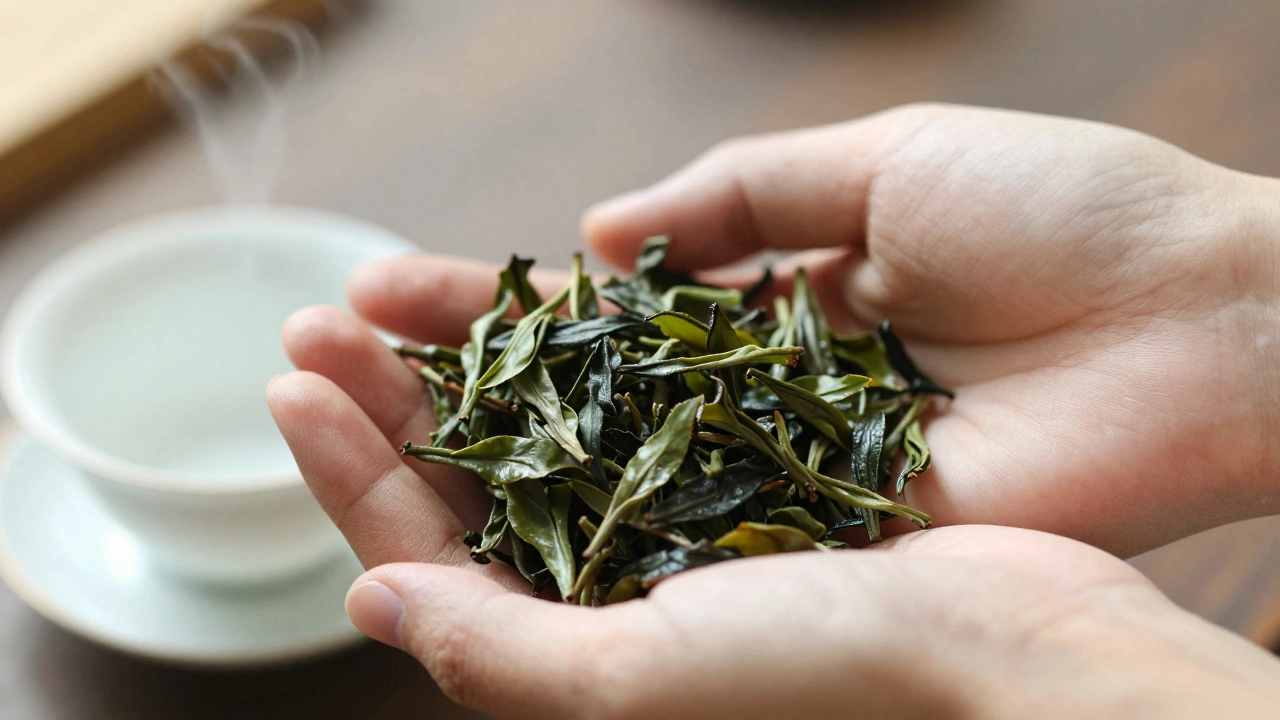
Before you even touch the kettle, look at the tea. Not just glance-really look. Take a small pile of dry leaves (about a teaspoon) and hold them under good light. Premium teas have leaves that are whole, uniform, and feel crisp. If they’re dusty, broken, or feel rubbery, that’s a red flag. Fresh leaves snap when you bend them. Stale ones just fold. This isn’t about looks-it’s about how the tea was processed and stored. Broken leaves release flavor too fast, leading to bitterness. Whole leaves unfold slowly, giving you control over the brew. Smell them. Bring the dry leaves close to your nose. Inhale deeply. What do you get? Floral? Toasty? Grassy? If it smells like nothing at all, or has a musty, stale odor, the tea’s been sitting too long. Good tea smells alive. Even a simple black tea should carry a hint of dried fruit or baked bread. A high-quality green tea should smell like fresh-cut grass or sea breeze. Don’t skip this step. The dry leaf aroma tells you what’s coming-and if the tea has any hidden flaws.Brew It Right
You can’t taste tea properly if you brew it wrong. Most people overheat or over-steep. That’s why their tea tastes harsh. The standard for professional tasting is simple: 2 grams of tea per 150ml of water. That’s about one heaping teaspoon. Use fresh, filtered water. Tap water with chlorine or minerals will mask the tea’s true character. Temperature matters. Green and white teas need cooler water-around 75-85°C. Black and oolong teas need hotter-90°C is ideal. Boiling water (100°C) will scorch delicate leaves and pull out too much tannin, making the tea bitter. Set a timer. Four minutes is the sweet spot for most black teas. Less than three, and you get barely any flavor. More than five, and you get bitterness that drowns out everything else. After brewing, pour the tea into a plain white porcelain cup. The white interior helps you see the color clearly. Premium black tea liquor should be bright amber or reddish-brown-not muddy or cloudy. If it looks dull or hazy, the tea might be low-grade or improperly stored.Smell It Twice
Now, smell the tea. Not once-twice. First, smell it before you sip. Hold the cup a few centimeters from your nose and take slow, deep breaths. This picks up the main aroma: floral, fruity, woody, smoky. Then, after you’ve sipped, exhale through your nose. This is called retro-olfaction. It’s how you catch the deeper, lingering notes. Professionals call this the “dog action” technique-short, quick sniffs, like a dog panting. It activates different smell receptors and reveals hidden layers. You might smell ripe peach one moment, then candied orange peel the next. These aren’t made up. Tea contains over 78 identifiable flavor compounds. That’s more than wine.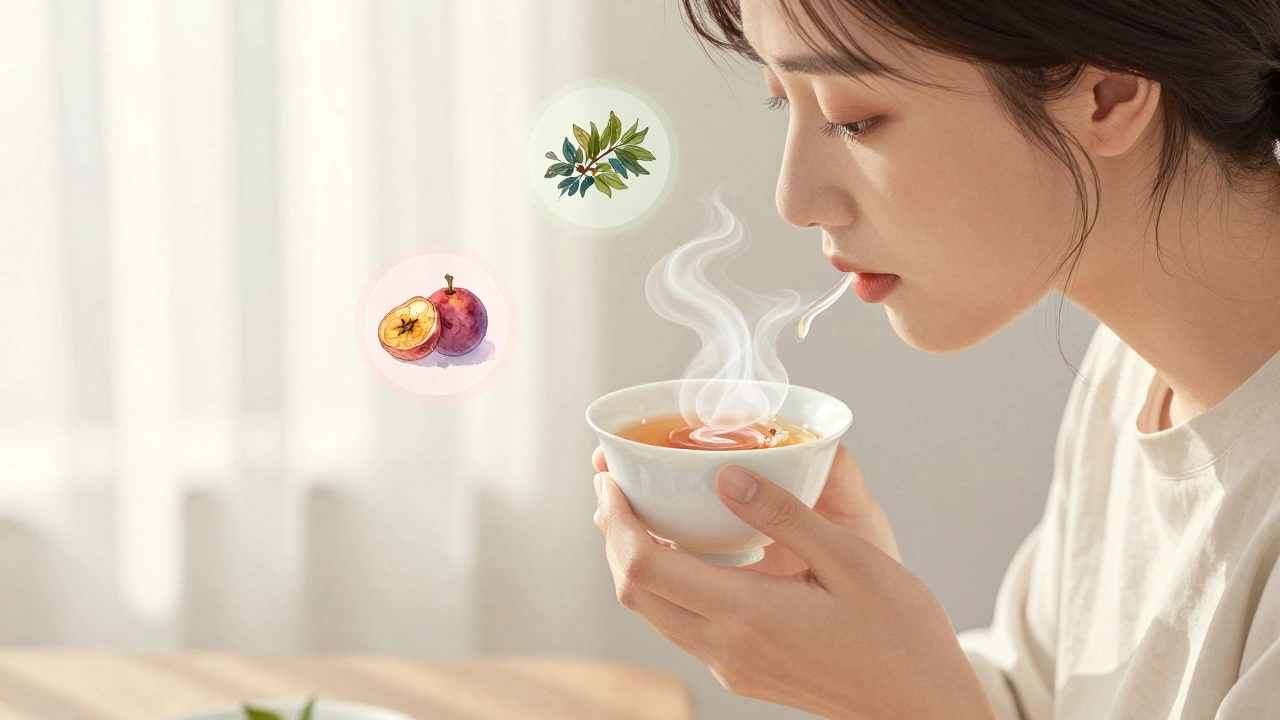
Slurp Like a Pro
This part feels weird at first. But if you want to taste tea properly, you have to slurp. Take a small sip-about five milliliters-and draw air in sharply through your mouth. Make a loud, audible slurp. It’s not rude-it’s science. Aerating the tea spreads it across your entire tongue and turns it into a mist. This unlocks 40% more flavor compounds. You’ll taste things you never noticed before: a hint of honey, a whisper of stone fruit, a touch of roasted chestnut. Don’t swallow right away. Hold the tea in your mouth for 8-10 seconds. Let it move over your tongue, cheeks, and roof of your mouth. Pay attention to texture. Is it thin like water? Or does it coat your tongue slightly, like a light broth? Premium tea should feel smooth and slightly thick-not watery. Think canned chicken soup, not tap water.Break Down the Flavor
Tea flavor isn’t one note. It’s three acts. Head notes hit first-those are the immediate, bright flavors: citrus, flowers, fresh herbs. They last 3-5 seconds. Then comes the body-the heart of the tea. That’s where you find malt, nuts, caramel, or earthy tones. These linger 5-8 seconds. Finally, the aftertaste. This is where quality shows. A cheap tea fades fast. A great tea lingers. You might still taste dried apricot or a clean mineral note 15 seconds after swallowing. That’s the signature of well-made tea. Use a simple scale: fruity, floral, nutty, earthy, smoky, sweet, bitter. Don’t force fancy words. Just notice what sticks.Reset Your Palate
Your tongue gets tired. After one or two sips, you stop tasting accurately. That’s why professionals always rinse their mouth with plain, cool water between samples. Wait 30 seconds. Don’t eat anything sweet or salty. Coffee, gum, even toothpaste can ruin your next sip. If you’re tasting multiple teas, do them one at a time. Start with the lightest-white tea-then move to green, oolong, and finally black. Sweet or spicy teas last. This keeps your palate sharp.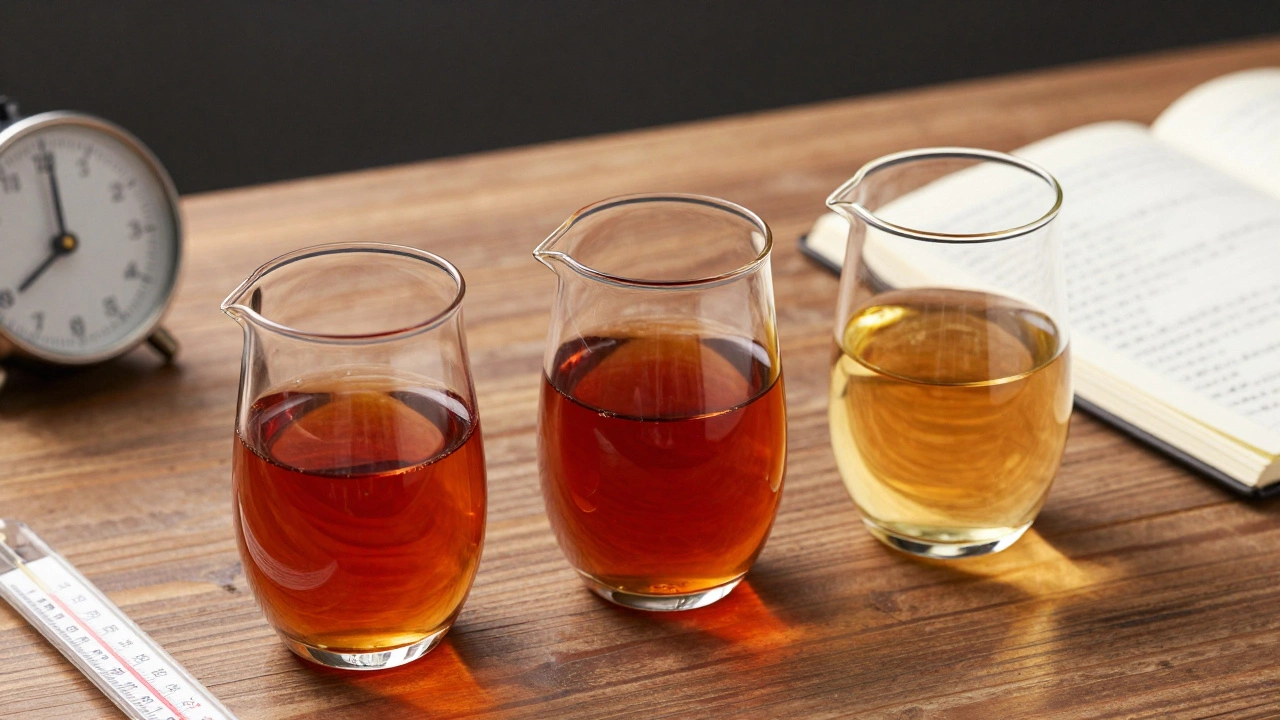
Practice Like a Pro
You won’t get good at this overnight. Professional tea tasters train for over 2,000 hours before they can reliably identify 128 distinct flavor notes. But you don’t need to be a pro to improve. Start with three teas: a floral white tea, a malty black tea, and a grassy green tea. Brew them the same way. Taste them side by side. Write down what you notice-even if it’s just “smells like grass” or “tastes like dried fruit.” Do this once a week for a month. You’ll be amazed at how much sharper your senses become. Many tea drinkers report a 25-30% increase in flavor detection after just 30 days of consistent practice.Environment Matters
Taste tea in a quiet, neutral space. No strong perfumes, no coffee brewing nearby, no frying onions. Even residual smells can interfere. The ideal room temperature is 22°C, with no direct sunlight. A calm, odor-free environment lets your senses focus. If you’re serious, dedicate a corner of your kitchen or living room just for tea tasting. Keep a small notebook. Jot down dates, teas, water temps, steep times, and notes. Over time, you’ll build your own flavor map. You’ll start recognizing teas by their scent alone. You’ll know when a tea is past its prime. And you’ll stop buying cheap, flavorless blends without thinking twice.Why This Matters
Tea tasting isn’t about being fancy. It’s about not wasting good tea. The global premium tea market is worth nearly $60 billion-and it’s growing fast. Companies that use proper tasting methods reduce waste by 18%, because they know exactly how to brew each batch. For you, it means you’ll stop drinking bitter, dull tea. You’ll find the ones that make you pause. The ones that make you smile. The ones that taste like something real. And once you learn how to taste tea correctly, you’ll never drink it the same way again.Do I need special equipment to taste tea correctly?
No. You don’t need fancy tools. A white porcelain cup, a timer, and clean water are enough. A 10x magnifying glass helps you check leaf quality, but it’s not required. The real tools are your nose, tongue, and attention. Skip the teapots with built-in strainers-they trap steam and mute aroma. Use a simple infuser or just pour loose leaves directly into the cup and strain after brewing.
Can I taste tea with tea bags?
You can, but you won’t get the full experience. Most tea bags contain broken leaves or dust-low-grade material that releases flavor too quickly and turns bitter. If you’re using bags, choose ones with whole-leaf tea inside (some premium brands do this). Still, loose leaf gives you control over brewing and lets you smell the dry leaves first. For serious tasting, loose leaf is better. But even with a bag, following the slurping and timing steps will improve your experience.
Why do I need to slurp? Isn’t that rude?
It might feel awkward, but slurping isn’t about manners-it’s about science. When you draw air in while sipping, you turn the tea into a fine mist that spreads across your entire mouth and nasal passages. This unlocks flavor compounds you’d miss otherwise. Professionals do it because it makes flavors 40% more noticeable. Once you try it, you’ll understand. Most people who try it once say, ‘I thought it was silly… until I tasted the difference.’
What’s the best time of day to taste tea?
Between 8 a.m. and 10 a.m. Your taste buds are sharpest then, before coffee, food, or strong flavors dull them. A 2021 USDA study found people detect 23% more flavor notes in the morning. Avoid tasting after meals or right after brushing your teeth. Water is your best friend between sips.
How do I know if a tea is high quality?
Look for three things: whole, uniform dry leaves; a bright, clear liquor with no cloudiness; and a lingering aftertaste that lasts over 10 seconds. High-quality tea doesn’t taste bitter or flat. It evolves in the cup-starting bright, then deepening, then fading slowly. If the flavor disappears the moment you swallow, it’s likely low-grade. Also, check the price. If a tea labeled as ‘premium’ costs less than $10 per 100g, it’s probably not. Real quality costs more-and you’ll taste the difference.




Categories