
Whisky Aroma Identifier
How It Works
Select the aromas you detect when smelling your whisky. The tool will help you identify the profile based on your sensory experience.
Select Your Aromas
Apple, pear, citrus, tropical fruits
Vanilla, cinnamon, nutmeg, clove
Peat, campfire, iodine, medicinal
Honey, caramel, toffee, malt
Wet grass, moss, damp wood
Salt, seaweed, brine
Your Whisky Profile
The tool will display your whisky's aroma profile here based on your selections.
Understanding Your Results
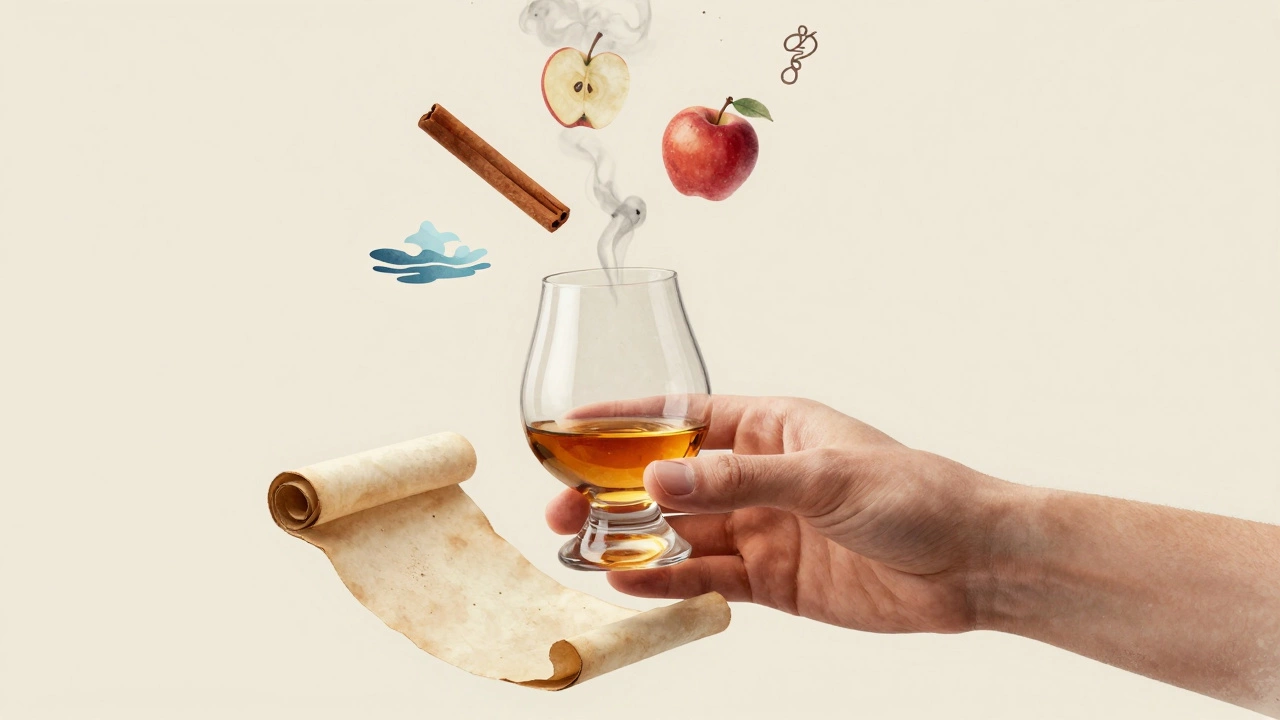
The nose tells the story of a whisky before you taste it. A complex whisky might show fruit and spice, while a coastal whisky could have maritime notes. Remember, your nose can detect thousands of aromas compared to just five tastes on your tongue.
When someone says whisky nose, they’re not talking about your nostrils - they’re talking about the scent. The nose of a whisky is its aroma, the first thing you pick up before you even take a sip. It’s not just background noise. It’s the story of the whisky, written in scent. And if you skip it, you’re missing half the experience.
Why the Nose Comes First
Tasting whisky isn’t like drinking soda. You don’t just gulp it down and move on. The nose is the opening chapter. It tells you what’s coming before your tongue even gets involved. A whisky’s aroma can hint at where it was made, what kind of barrel it aged in, and even how the barley was dried. Skip the smell, and you’re tasting blindfolded.Think of it like walking into a bakery. You smell the bread before you see it. The same thing happens with whisky. The nose is your guide. It’s why professionals always smell before they sip - and why you should too.
How to Smell Whisky Right
You can’t just stick your nose into the glass and take a big inhale. That’s the wrong way. You’ll overwhelm your senses with alcohol vapors and miss the subtle notes.Here’s how to do it right:
- Use the right glass. A Glencairn glass or a tulip-shaped nosing glass is ideal. Its narrow rim traps the aromas and directs them to your nose.
- Pour a small amount - about an ounce. Too much and the alcohol drowns out the scent.
- Gently swirl the whisky. This releases the volatile compounds trapped in the liquid. You’ll see it cling to the sides of the glass - that’s called "legs," and it tells you about the texture.
- Hold the glass about an inch below your nose. Don’t plunge in. Breathe in slowly through your nose. Take two or three breaths. Let your brain adjust.
- Don’t rush. The first smell might be sharp. The second might be sweeter. The third? That’s where the real notes start to show.
It’s not about smelling hard. It’s about smelling patiently.
What You’re Actually Smelling
The nose of a whisky isn’t random. It’s built from the ingredients and the process. Here’s what common aroma profiles mean:- Fruity - Think apple, pear, citrus, or even tropical like pineapple. This usually comes from the yeast used in fermentation or from aging in ex-bourbon barrels.
- Spicy - Vanilla, cinnamon, nutmeg, or clove. These come from the wood of the cask. Heavily charred barrels give more spice. Sherry casks add dried fruit and baking spices.
- Smoky - This is peat. If you smell campfire, bonfire, or even medicinal iodine, the barley was dried over a peat fire. Islay whiskies like Laphroaig or Ardbeg are famous for this.
- Sweet - Honey, caramel, toffee, or malt. These come from the grain itself and the aging process. Long aging in sweet sherry casks can make a whisky taste like liquid toffee.
- Earthy - Wet grass, moss, damp wood. These notes are common in Highland whiskies. They’re subtle but tell you the whisky was aged in a humid environment.
- Maritime - Salt, seaweed, brine. If you smell the ocean, the distillery is probably near the coast. Arran, Talisker, and Oban all carry this signature.
One whisky can have five of these at once. That’s what makes it complex. And that’s why smelling it matters so much.
Why Peat Smells Like Medicine
If you’ve ever smelled a smoky whisky and thought, "This smells like a hospital," you’re not wrong. Peat smoke contains phenols - the same compounds used in antiseptics. That’s why Islay whiskies can smell like iodine or bandages. It’s not a flaw. It’s a signature. And once you get used to it, you start to crave it.Not all peat is the same. Some peat is mossy and sweet. Some is charred and ashy. The soil where the peat was harvested changes the aroma. That’s why Laphroaig smells different from Talisker, even though both are peaty.
The Nose vs. The Taste
Your nose picks up way more than your tongue. Your tongue can only detect five tastes: sweet, sour, salty, bitter, umami. Your nose? It can detect thousands of different aromas.That’s why a whisky can smell like orange peel and vanilla - but taste like burnt sugar and smoke. The nose sets the expectation. The taste delivers the surprise. Sometimes they match. Sometimes they don’t. That’s part of the fun.
Try this: Smell a whisky. Then take a small sip. Swish it around your mouth. Then swallow. Now, breathe out through your nose. That’s called "retro-nasal olfaction." It’s how you taste the finish. That last wave of smoke, honey, or spice? That’s your nose again - working through your throat.

How to Train Your Nose
You don’t need to be a master taster to get better at this. Just practice.- Start with three whiskies: one light and fruity (like Glenfiddich), one smoky (like Laphroaig), and one rich and sweet (like Macallan 12). Smell them side by side. Compare.
- Try smelling everyday things: fresh apples, cinnamon sticks, smoked salmon, wet soil. Train your brain to recognize those scents.
- Write down what you smell. Even if you’re wrong. "I smell wet socks" is better than nothing. You’ll start to refine your language.
- Don’t trust the bottle. The label says "notes of citrus and oak." That’s marketing. Your nose is the real guide.
The more you smell, the more you’ll notice. What once seemed like "just smoke" becomes "charred oak with a hint of iodine." And that’s when whisky stops being a drink - and starts being a story.
Common Myths About Whisky Nose
Some people think "nose" means a swollen nose from drinking too much. That’s rhinophyma - a medical condition, not a tasting term. This confusion comes from old slang, but in whisky circles, "nose" means one thing: aroma.Another myth: "You need to be a sommelier to smell anything." Nope. You just need to try. Beginners smell more than experts sometimes because they’re not overthinking it. Don’t wait to be "ready." Smell now.
What to Do If You Can’t Smell Anything
Sometimes, the nose feels blank. That’s normal. Alcohol can numb your senses. Here’s what to do:- Let the whisky sit for 10 minutes. Let the alcohol evaporate a little.
- Add a drop of water. It opens up the aromas. Seriously. A single drop can transform the nose.
- Try a different glass. A tumbler won’t trap scent. A Glencairn will.
- Take a break. Smell coffee beans or a lemon. Reset your nose.
Don’t force it. The nose will reveal itself - if you give it time.
Is the nose of whisky the same as its flavor?
No. The nose is what you smell before you sip. Flavor is what your tongue and throat experience after you swallow. The nose gives you hints - smoke, fruit, spice - but the flavor might surprise you. A whisky can smell sweet but taste smoky, or smell peaty but taste fruity. That’s part of the magic.
Why do some whiskies smell like seaweed or iodine?
That’s the maritime influence. Distilleries near the sea - like Talisker on Skye or Oban on the west coast - use casks that absorb salt air. The peat used to dry the barley may also contain seaweed. These elements leave a briny, iodine-like aroma. It’s not a defect. It’s a signature of coastal whisky.
Can you smell the age of a whisky?
Not directly. You can’t smell "12 years" or "25 years." But you can smell the effects of aging. Older whiskies often have deeper, richer notes - dried fruit, leather, polished wood. Younger ones are brighter - citrus, vanilla, cereal. The cask type matters more than the number on the bottle.
Do I need a special glass to smell whisky properly?
Not strictly, but it helps. A Glencairn glass or tulip-shaped nosing glass concentrates the aroma. A tumbler spreads it out. You can smell whisky from any glass - but you’ll miss subtle notes. If you’re serious about tasting, get one. They cost less than a bottle of decent whisky.
Does adding water really change the nose?
Yes. Alcohol hides aromas. Adding a drop or two of water reduces the burn and lets the hidden notes rise. It’s like unlocking a secret. Try it with a smoky whisky. You’ll suddenly smell honey, smoke, and even chocolate that you missed before.





Categories