Cocktail Authenticity Checker
Is Your Cocktail Authentic?
Check if your drink follows the original recipes of the four foundational cocktails.
The Four Cocktails That Defined Everything
Ask ten bartenders what the four main cocktails are, and you’ll get ten different answers. But if you ask a bartender who’s studied the history of drinks-really studied it-you’ll hear the same four names over and over: Old Fashioned, Martini, Daiquiri, and Negroni. These aren’t just popular drinks. They’re the building blocks. The DNA. The original templates from which nearly every modern cocktail was born.
There’s no official list. No cocktail police. But if you trace the roots of mixing drinks back to the 1800s, these four stand out because they each represent a different structural category that still defines how we build drinks today. They’re not just recipes. They’re systems.
The Old Fashioned: The Original Cocktail
In 1806, a newspaper in New York called The Balance and Columbian Repository defined a cocktail as: spirits, sugar, water, and bitters. That’s it. No fruit. No fancy garnishes. Just those four things, stirred together. That drink was the Old Fashioned.
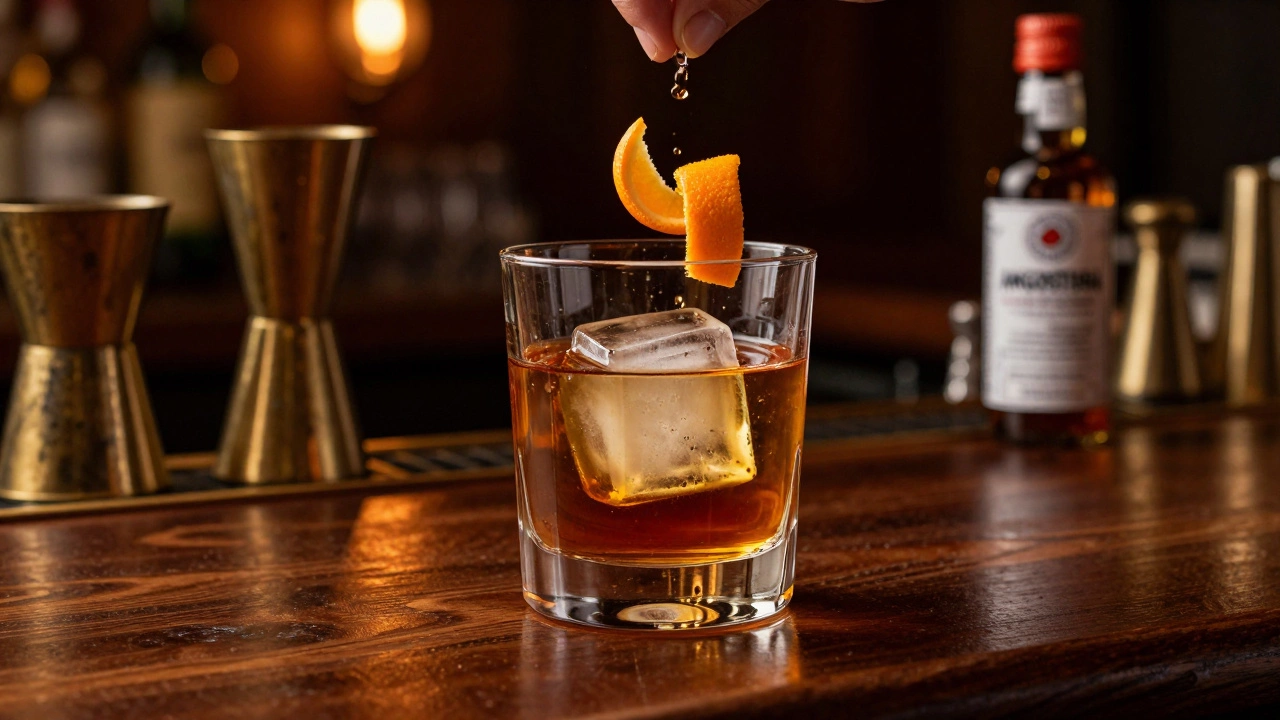
Today, it’s usually made with 2 oz of bourbon or rye whiskey, one sugar cube (or half an ounce of simple syrup), two or three dashes of Angostura bitters, and a splash of water. It’s served over a single large ice cube in a rocks glass, with an orange twist twisted over the top to release oils. That’s the modern version. But the core hasn’t changed.
Why does it matter? Because every cocktail that came after it was built on this idea: start with spirit, sweeten it, balance it with bitterness, dilute it with ice. The Old Fashioned is the prototype. It’s the reason we stir drinks instead of shaking them. It’s the reason we use bitters at all. If you understand the Old Fashioned, you understand the foundation of everything else.
Here’s the catch: most bars mess it up. They muddle orange slices, add cherries, dump in soda, or use cheap whiskey. A real Old Fashioned doesn’t need those things. It’s not a party drink. It’s a quiet one. A thoughtful one. A test of the bartender’s skill. If they can get this right, you know they know what they’re doing.
The Martini: The King of Simplicity
The Martini is the cocktail that made drinking look cool. James Bond didn’t invent it, but he turned it into a cultural icon with his "shaken, not stirred" line. The truth? It’s been around since the 1870s, evolving from a sweeter drink called the Martinez into the dry, gin-forward version we know today.
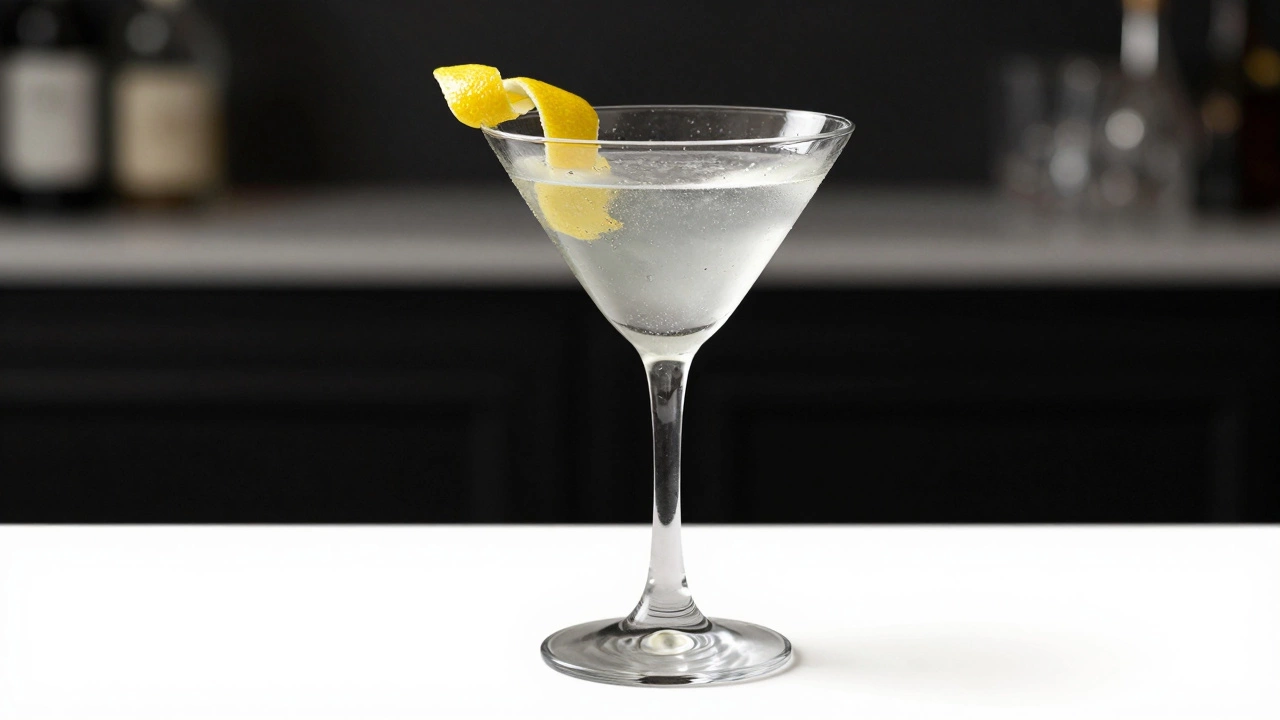
Classic Martini: 2.5 to 3 ounces of London dry gin, 0.5 ounce of dry vermouth. Stirred with ice for 30 to 45 seconds until it’s ice-cold. Strained into a chilled coupe or V-shaped glass. Garnished with a lemon twist or an olive. That’s it. No ice in the glass. No sugar. No fruit. Just gin, vermouth, and cold.
What makes it hard? Temperature. If it’s not cold enough, it tastes flat. If it’s stirred too long, it over-dilutes. If you shake it, you cloud the gin and make it watery. That’s why real bartenders stir it-slowly, deliberately. The ice has to be the right size (about 2.5 cm cubes), the glass has to be chilled, and the vermouth has to be fresh. Old vermouth turns bitter and ruins the drink.
The Martini is the ultimate bar exam. Walk into a place and order one. If they serve it warm, use too much vermouth, or garnish it with five olives, walk out. A good Martini is clean, sharp, and quiet. It doesn’t shout. It doesn’t need to.
The Daiquiri: The Perfect Formula
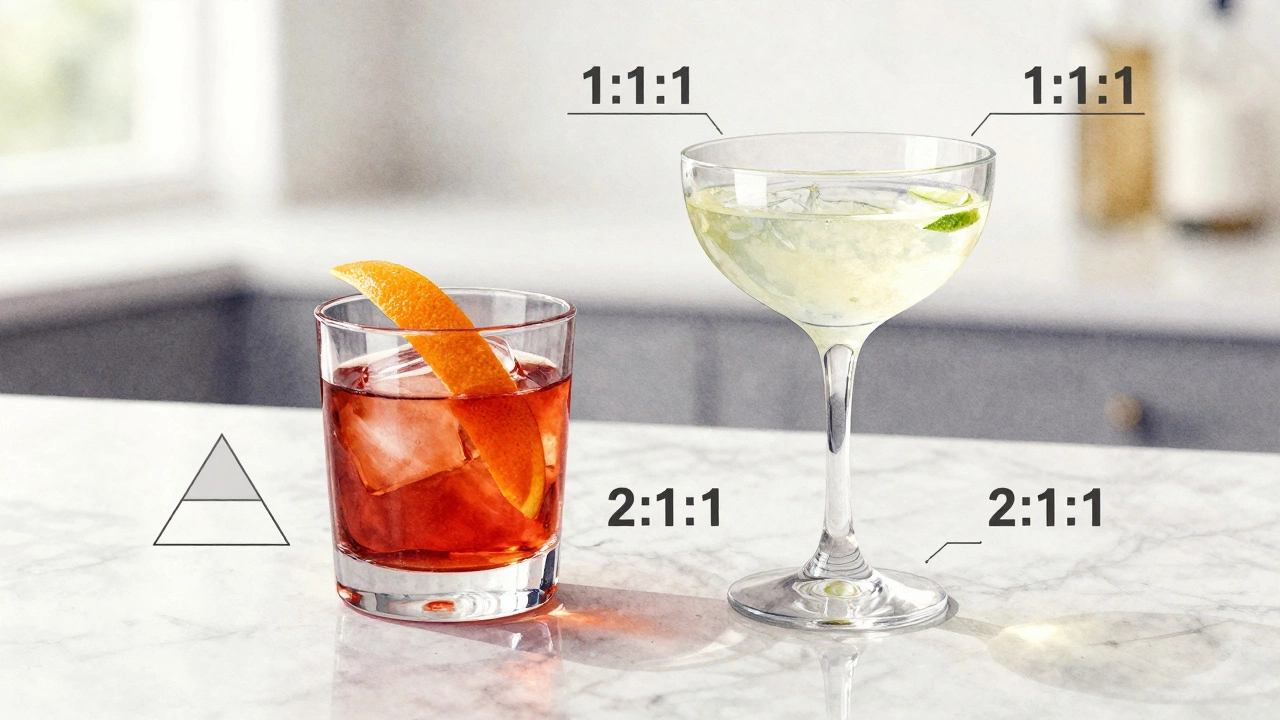
Here’s a fact most people don’t know: the Daiquiri is the only cocktail with a mathematically perfect ratio. It’s 2:1:1. Two parts rum, one part lime juice, one part simple syrup. That’s it. No exceptions. No substitutions. That’s the formula documented by Jennings Cox in 1909, after he and his mining crew in Cuba started mixing it to make the local rum more drinkable.
Modern version: 2 oz white rum, 1 oz fresh lime juice, 1 oz simple syrup. Shake hard with ice for 15 seconds. Strain into a coupe glass. No garnish. That’s the original. No frozen slush. No pineapple. No neon color.
Why is this so important? Because every sour cocktail that came after it-Whiskey Sour, Margarita, Sidecar, Pisco Sour-follows this same 2:1:1 structure. The Daiquiri is the blueprint. Get this right, and you can build any sour drink.
But here’s the problem: 78% of bars serve a fake version. They use bottled lime juice. They add sugar syrup that’s too thick. They freeze it into a slushy and call it a "Daiquiri"-but it’s not. A real Daiquiri is bright, tart, and clean. It’s the taste of summer. It’s the drink that taught the world how to balance acid and sweetness.
Try this: next time you order one, ask for "traditional" or "classic." If they look confused, you’re in the wrong place.
The Negroni: The Bitter Revolution
In 1919, Count Camillo Negroni walked into a café in Florence and asked his bartender to make his Americano stronger. The Americano was sweet vermouth, Campari, and soda. So the bartender swapped the soda for gin. The Negroni was born.
It’s 1:1:1. One ounce gin, one ounce sweet vermouth, one ounce Campari. Built over ice in a rocks glass. Stirred gently. Garnished with an orange twist. That’s it. No variations. No substitutions. That’s the rule.
What makes the Negroni special? It’s the first major bitter cocktail. Before this, most drinks were sweet or spirit-forward. The Negroni introduced balance-not just between sweet and sour, but between bitter, sweet, and strong. It’s a drink that challenges you. It’s not for everyone. But once you get it, you never go back.
It’s also the most popular cocktail in Europe. In Italy, Spain, and France, it’s the aperitif of choice. In the U.S., it’s exploded since 2010. Campari’s sales jumped 214% between 2015 and 2023 because of it. And now there are variations: the Boulevardier (bourbon instead of gin), the Mezcal Negroni, even a gin-and-tea version. But the original? Still the best.
Don’t substitute Aperol for Campari. Don’t use orange juice. Don’t add sugar. The bitterness is the point. It’s what wakes up your palate. It’s what makes you want another.
Why These Four? The Bigger Picture
These aren’t just four drinks. They’re four categories.
- The Old Fashioned is the aromatic cocktail-spirit, sugar, bitters, water.
- The Martini is the straight cocktail-spirit and vermouth, no sweetness, no fruit.
- The Daiquiri is the sour cocktail-spirit, citrus, sugar.
- The Negroni is the bitter cocktail-spirit, sweet vermouth, bitter liqueur.
Every cocktail you’ve ever had falls into one of these four families. A Manhattan? It’s a cousin to the Old Fashioned. A Margarita? It’s a Daiquiri with tequila. A Boulevardier? It’s a Negroni with bourbon.
That’s why these four matter. They’re not just drinks. They’re categories. Systems. Rules. If you learn these, you can create your own drinks. You can fix bad ones. You can understand why a bartender does what they do.
What Goes Wrong-and How to Avoid It
Even simple drinks get ruined. Here’s what you’ll see in most bars-and how to spot the real deal:
- Old Fashioned: If they muddle fruit or use soda water, it’s not right. Real ones have one ice cube, no garnish beyond the twist, and sugar that’s fully dissolved-not clumpy.
- Martini: If it’s served with ice in the glass, or if the vermouth is the dominant flavor, it’s wrong. A proper Martini should taste like gin, with just a whisper of vermouth.
- Daiquiri: If it’s frozen, sweet like candy, or has pineapple in it, it’s not a Daiquiri. Real ones are clear, cold, and tart. Lime juice must be fresh-no bottled stuff.
- Negroni: If they use Aperol instead of Campari, or add soda, it’s not a Negroni. Campari is bitter, not sweet. That’s the whole point.
And here’s one more tip: always order these drinks with ice. Never ask for them "on the rocks" unless you mean the Old Fashioned. The Martini, Daiquiri, and Negroni are strained into chilled glasses. Ice is for stirring, not serving.
Why They’ll Last Forever
These four cocktails aren’t trends. They’re timeless. They’ve survived Prohibition, the rise of sugary mixers, the explosion of craft cocktails, and the age of Instagram drinks with edible flowers and smoke.
Why? Because they’re simple. Because they’re balanced. Because they’re built on rules, not gimmicks. A bartender who masters these four can make any drink. A drinker who understands them can tell good from bad.
They’re not just drinks you order. They’re drinks you learn from. And if you want to know what real cocktail culture is, start here. Not with a flaming pineapple or a glittery mojito. Start with these four.
Are the Old Fashioned, Martini, Daiquiri, and Negroni the only important cocktails?
No, they’re not the only important ones, but they’re the most foundational. Other drinks like the Manhattan, Whiskey Sour, and Sidecar are also classics, but they’re variations of these four. The Manhattan is essentially an Old Fashioned with rye and sweet vermouth. The Whiskey Sour is a Daiquiri with whiskey. These four cover the core structural templates that all others are built on.
Why is the Daiquiri so often served frozen?
It’s a marketing trick. In the 1980s and 90s, bars started serving sweet, frozen versions to appeal to tourists and casual drinkers. These aren’t the real thing-they’re sugary slushies with cheap rum and artificial flavors. The traditional Daiquiri is a crisp, chilled drink with no ice in the glass. If you want the real version, always ask for "classic" or "traditional."
Can I substitute ingredients in these cocktails?
You can, but you’re not making the original anymore. Substituting Aperol for Campari makes a Negroni variation, not a Negroni. Using bourbon instead of gin makes a Boulevardier. The original recipes were designed with specific flavors in mind. If you want to experiment, do it after you’ve learned the classic version. That way, you’ll know what you’re changing-and why.
Why does the Martini need to be stirred, not shaken?
Stirring chills the drink gently and keeps it clear. Shaking aerates the gin, making it cloudy and slightly watery. It also bruises the botanicals in the gin, dulling the flavor. James Bond liked it shaken because he was a fictional spy who didn’t care about taste-he cared about style. Real bartenders stir it to preserve the spirit’s integrity.
What’s the best way to learn these cocktails at home?
Start with the Daiquiri. It’s the easiest to measure accurately: use a jigger, fresh lime juice, and real simple syrup (equal parts sugar and water, dissolved). Then try the Old Fashioned-focus on dissolving the sugar fully. Move to the Martini and learn stirring technique. Finally, tackle the Negroni. Taste each one slowly. Compare your version to what you get at a good bar. You’ll learn more from tasting than from reading.

Categories