Wine Age Calculator
Select Your Wine
Wine Profiles
Brunello di Montalcino
Tuscany, Sangiovese Grosso
Requires 3 years aging (plus 6 months bottle)
Select a wine and vintage to see when it will be ready to drink
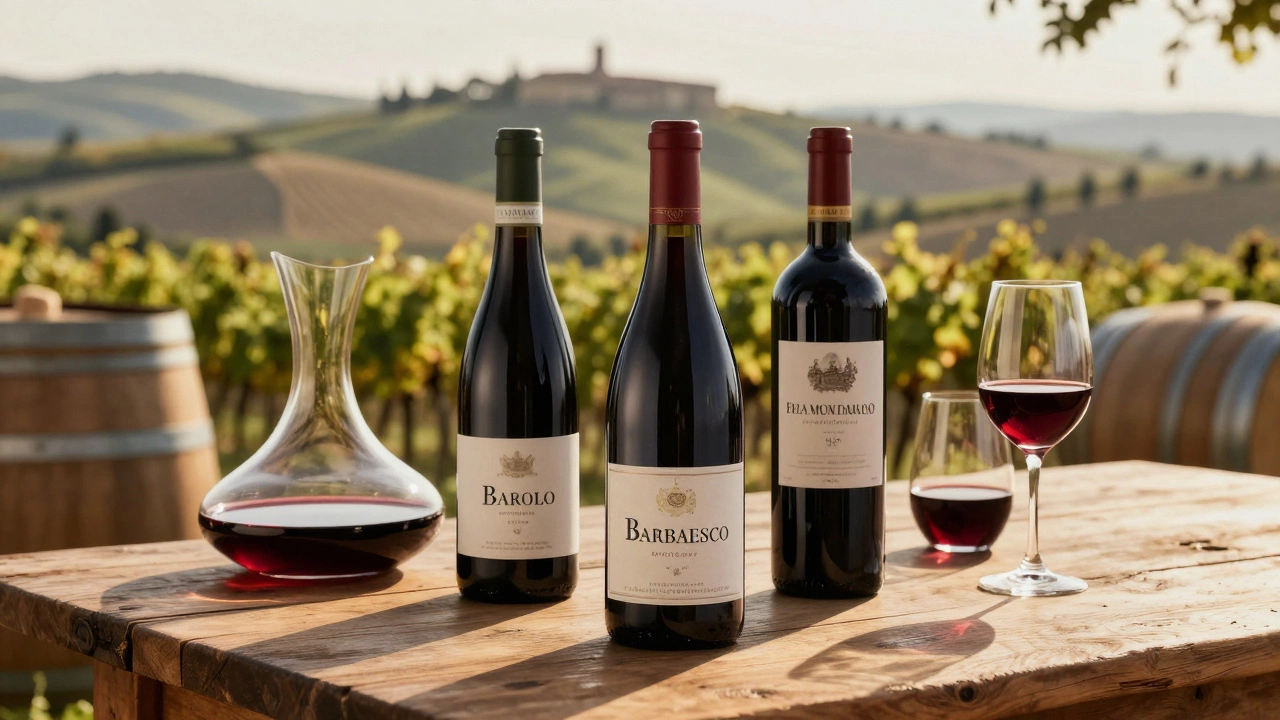
The three B's of wine aren't a tasting trick or a fancy term invented by sommeliers-they’re three of Italy’s most powerful, age-worthy, and revered red wines: Barolo, a bold, tannic red from Piedmont made from Nebbiolo grapes, Barbaresco, a slightly more elegant sibling from the same region, also made from Nebbiolo, and Brunello di Montalcino, a rich, complex wine from Tuscany made from 100% Sangiovese Grosso. These aren’t just wines-they’re benchmarks for what Italian reds can achieve when terroir, tradition, and time come together.
Why These Three? The Terroir Difference
Each of the three B’s comes from a completely different part of Italy, with soil, climate, and grape variety shaping their character. Barolo and Barbaresco are neighbors in Piedmont, northwest Italy, where the Langhe hills rise above the Tanaro River. Both are made from Nebbiolo, a grape known for its thick skin, high acidity, and brutal tannins. But even here, the difference matters. Barolo grows on heavier clay soils that hold water and heat, giving wines more structure, depth, and aging power. Barbaresco, on the other hand, sits on lighter, more porous alluvial soils. The result? Wines that open up faster, with more floral notes and a silkier texture.
Brunello di Montalcino is a whole different story. It comes from Tuscany, about 200 miles south, where the hills around the town of Montalcino bake in summer sun. The soil here is chalky limestone, perfect for Sangiovese Grosso-the local clone of Sangiovese that’s bigger, darker, and more concentrated than the one used in Chianti. While Nebbiolo needs decades to soften, Sangiovese in Brunello builds its structure differently: through deep color, bright acidity, and intense dark fruit. It’s not just a different grape-it’s a different kind of power.
Aging Rules: Time Is the Fourth B
These wines don’t just sit around. Italian law demands they age-sometimes for years before you can even buy them. Barolo must spend at least three years aging before release, with Riserva versions needing five. That means a 2020 Barolo won’t hit shelves until 2023, and a top Riserva won’t be ready until 2025. Barbaresco has slightly more lenient rules: two years aging total (one in wood, one in bottle), with Riserva requiring four. Brunello di Montalcino? Minimum three years in oak, plus six months in bottle before release. Many producers go longer-five years total isn’t unusual.
And here’s where it gets interesting: the barrels used make a huge difference. Traditionalists in Piedmont still use giant Slavonian oak casks called botti-500 to 1,000 liters. These are neutral, letting the grape and soil speak. But in the 1980s, a group of young winemakers, nicknamed the Barolo Boys, started using small French oak barriques. These 225-liter barrels add vanilla, spice, and toast. Suddenly, Barolo went from rustic to rich. Today, you’ll find both styles: the old-school, earthy Barolos and the modern, fruit-forward ones. Brunello, too, has split-some use French oak for depth, others stick to large casks to preserve Sangiovese’s natural acidity and cherry character.
Taste the Difference: What’s in the Glass
If you taste all three side by side, you’ll notice they don’t just taste different-they feel different.
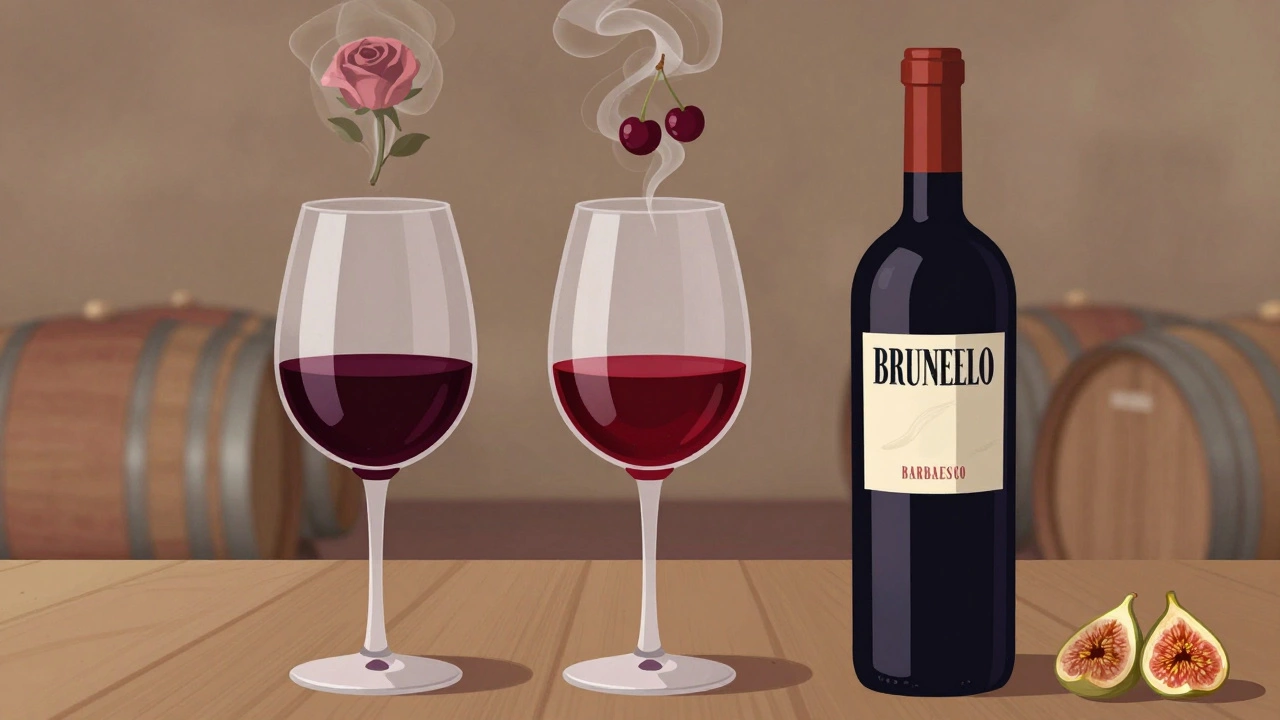
- Barolo hits you with tar, dried roses, and black cherry, layered over wet stone and leather. Its tannins are firm, almost chalky, and demand decanting. This is the wine that needs a 10-year nap before it lets you in.
- Barbaresco is more graceful. Think red cherry, cinnamon, and rose petals, with a hint of wild herbs and a touch of earth. The tannins are there, but they’re smoother, more integrated. It’s the wine you can open on a weeknight and still feel like you’re celebrating.
- Brunello di Montalcino is dense and dark-plum, blackberry, and dried fig, with a backbone of spice and tobacco. It’s not as tannic as Barolo, but it’s more intense. The acidity keeps it fresh, even after 15 years in the cellar. You’ll taste the sun here-the warmth of Tuscany in every sip.
None of them are fruity in the way a New World Pinot Noir is. These are wines built for complexity, not easy drinking. They evolve in the glass. A bottle of Barolo from 2015 might taste like iron and dried herbs at first, then open to wild strawberry and forest floor after an hour in a decanter. That’s the magic.
Price and Accessibility: Which One Should You Try First?
Let’s be honest-these wines aren’t cheap. A decent bottle of Barolo starts around $60, and top names like Giacomo Conterno or Bartolo Mascarello can easily hit $300 or more. Barbaresco? You’ll find excellent bottles starting at $50, with many under $100 offering serious quality. Brunello di Montalcino sits in the middle: entry-level bottles start around $65, but the best can cost $200+. The good news? Barbaresco often gives you more bang for your buck. It’s more approachable younger, and you don’t need to wait a decade to enjoy it.
For beginners, start with Barbaresco. It’s the most forgiving of the three. A 2018 or 2019 Barbaresco will already be softening, showing off its rose and cherry notes without needing a cellar. If you want to try Brunello, go for a 2017 or 2018 vintage-they’re starting to come into their own. Barolo? Save it for a special occasion. It’s the heavyweight champ, and it needs time to show its best.
Food Pairings: What to Serve With the Three B's
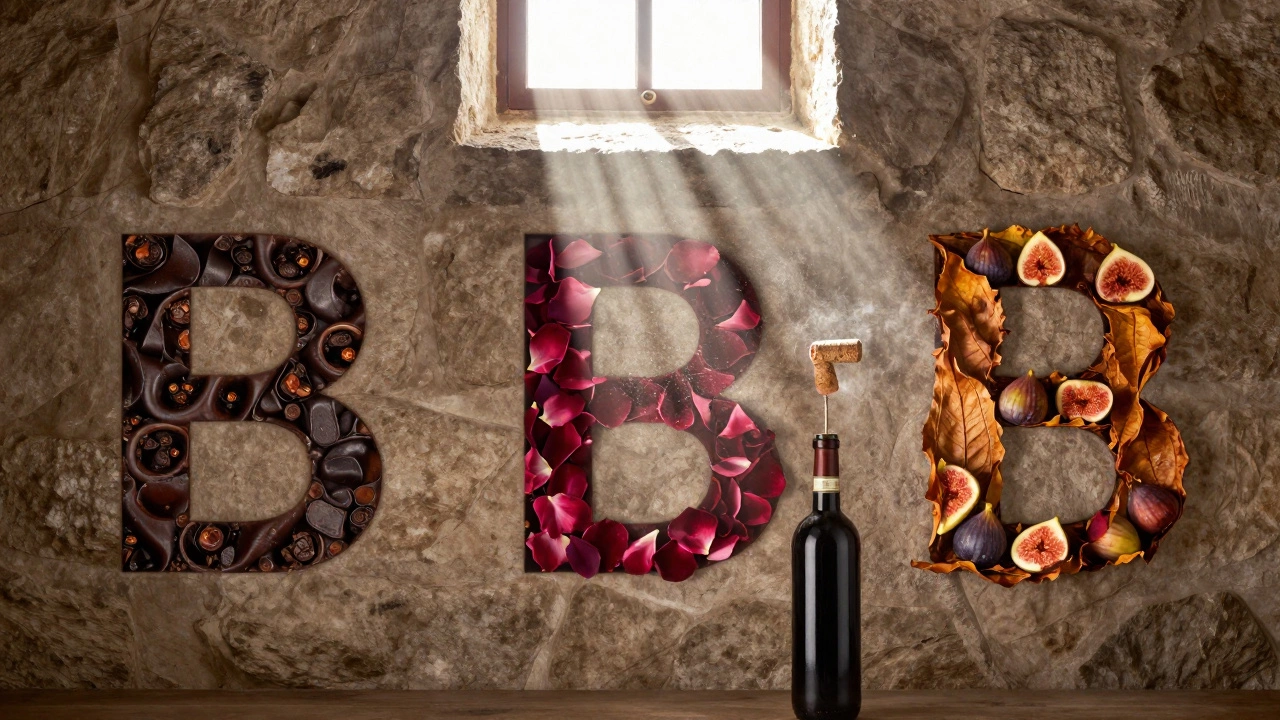
These wines don’t just sit on the table-they demand a meal. Barolo and Barbaresco are perfect with rich, fatty meats. Think truffle-tagliatelle, braised beef, wild boar ragù, or aged pecorino cheese. The tannins cut through fat like a knife. Barolo even pairs surprisingly well with mushroom risotto-it’s a classic in Piedmont.
Brunello di Montalcino? It’s the king of Tuscan tables. Serve it with grilled ribeye, duck breast with figs, or a slow-cooked wild boar stew. It loves herbs like rosemary and sage. Don’t pair it with light dishes-it’ll overpower them. A simple plate of prosciutto and melon? Skip it. This wine wants to be the centerpiece.
And if you’re lucky enough to find a bottle of Barolo from a top producer aged 15+ years? Try it with a rare, dry-aged steak. The wine will have lost its rough edges and turned into something velvet-dark chocolate, dried cherry, and forest moss. It’s not just food and wine. It’s history in a glass.
Why the Three B’s Still Matter
These wines aren’t just about price or prestige. They’re about place. Barolo, Barbaresco, and Brunello di Montalcino each tell the story of their land-the soil, the sun, the centuries of winemaking passed down through families. They’re not made to be trendy. They’re made to last. And that’s why collectors, chefs, and wine lovers still chase them.
In a world of quick-drinking wines, the three B’s are a reminder that some things can’t be rushed. A great bottle of Barolo doesn’t just taste good-it makes you wait. And when it finally opens up? It’s worth every year.
Are the three B's of wine only from Italy?
Yes. The "three B's" specifically refer to Barolo, Barbaresco, and Brunello di Montalcino-all Italian DOCG wines from distinct regions. While other countries make excellent Nebbiolo or Sangiovese wines, only these three carry the official designation and tradition behind the term.
Can I drink these wines young, or do I need to age them?
You can drink them young, but they’re designed to improve with age. Barbaresco is the most approachable in its youth-try a 2019 or 2020. Brunello di Montalcino from 2017 or later is starting to open up. Barolo, however, usually needs at least 8-10 years to soften. Decanting helps, but time is the best tool.
Is Barbaresco cheaper than Barolo?
Generally, yes. Barbaresco often costs 15-30% less than Barolo from the same vintage and producer. It’s also more approachable earlier, making it a better entry point into the world of premium Italian reds.
What’s the difference between Nebbiolo and Sangiovese?
Nebbiolo (used in Barolo and Barbaresco) has high tannin, high acidity, and light color-it’s like a dark-skinned grape that makes pale wine. It smells of roses, tar, and dried fruit. Sangiovese (used in Brunello) has deeper color, bright acidity, and flavors of cherry, plum, and herbs. It’s more structured than Pinot Noir but less tannic than Nebbiolo.
Why do some Barolos taste like vanilla?
That’s from French oak barriques, introduced in the 1980s. Traditional Barolo used large Slavonian oak casks that added almost no flavor. Modern winemakers use small French barrels to soften tannins faster and add vanilla, spice, and toast. Both styles exist today-some purists still make old-school Barolo, while others embrace the modern approach.
If you’ve never tried one of the three B’s, start with Barbaresco. It’s the friendliest gateway into Italy’s most legendary wines. And when you do? Pour it slowly. Let it breathe. Wait for it to speak. That’s when you’ll understand why these wines still command the world’s attention.

Categories