Wine Tasting Time Calculator
Calculate Your Tasting Time
Your Estimated Tasting Duration
Based on your selections
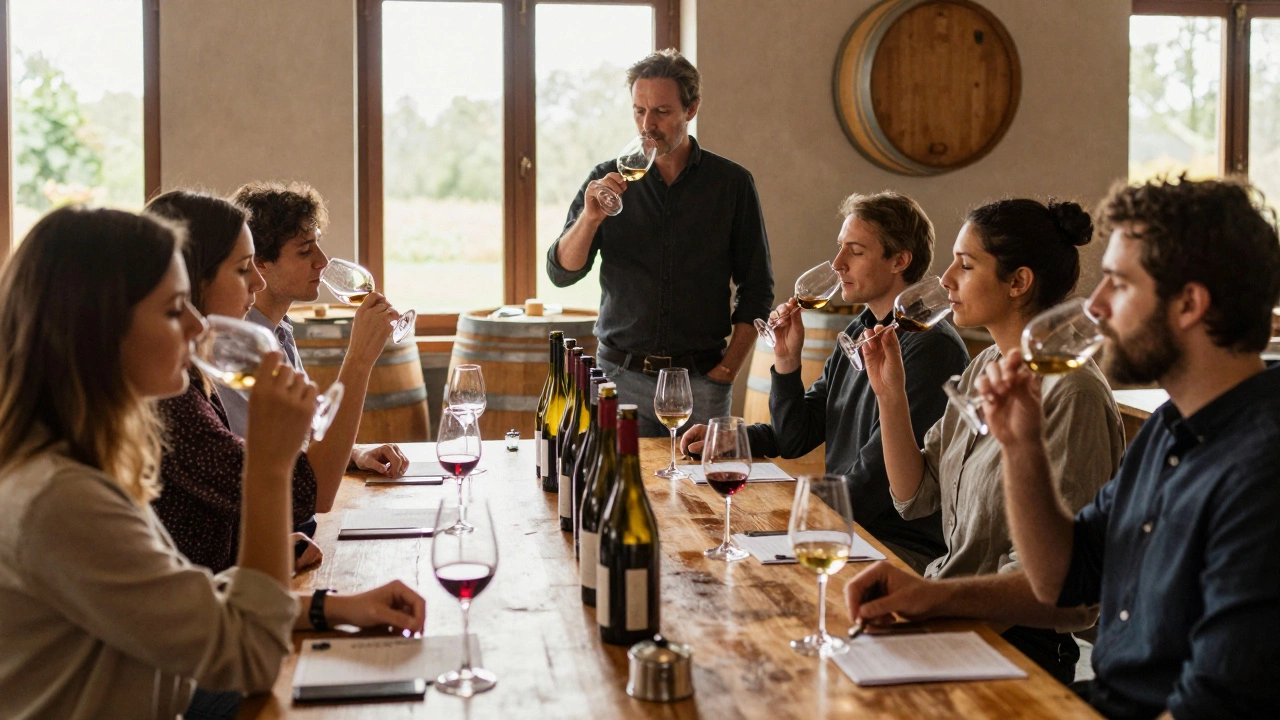
Ever shown up at a winery, excited to taste some great wine, only to wonder how long you’re really going to be there? You’re not alone. Most people assume wine tastings are quick - maybe 15 minutes, tops. But the truth? They rarely are. The average wine tasting lasts 60 to 75 minutes. That’s not a guess. It’s what wineries from Napa to Oregon actually schedule. And if you’re planning a day of tastings, you need to plan around that number - not the 30-minute myth you might’ve heard.
Why 60 to 75 Minutes Is the Standard
Why not just pour five wines and call it a day? Because wine tasting isn’t about drinking. It’s about experiencing. A proper tasting follows a rhythm: look, smell, sip, swirl, savor. Each step takes time. Most wineries pour 1 to 2 ounces per wine. If you’re tasting five wines, that’s 5 to 10 ounces total - almost two full glasses. But you’re not chugging. You’re studying.
Here’s how it breaks down:
- Look: Holding the glass up to the light, checking color, viscosity, clarity. Takes 30 seconds per wine.
- Smell: Swirling gently, then taking a deep inhale. You’re not just smelling fruit - you’re hunting for earth, spice, oak, even wet stone. This alone can take 45 seconds to a full minute per wine.
- Sip: Not a gulp. You let it coat your tongue, roll over your cheeks, feel the tannins. Then you breathe out through your nose. That’s when you catch the finish.
- Savor: After you spit (yes, you spit), you notice how the flavors change. Does the acidity linger? Does the fruit fade or grow? This silent moment is where the magic happens.
Do that for six wines? That’s 10 to 15 minutes just on technique. Add in the host explaining each vineyard, the soil type, the vintage, the winemaker’s choices? You’re already at 45 minutes. Then there’s the questions. Someone always asks, “Why does this taste like wet gravel?” And the staff? They love that question. They’ll spend five minutes on it. That’s how you get to 75 minutes.
What Changes the Clock?
Not every tasting is the same. The length shifts depending on what you’re doing.
- Basic tasting (3-5 wines): 30-45 minutes. This is often the walk-in rate at smaller wineries. No tour. Just the tasting room. You get in, taste, maybe buy a bottle, leave.
- Standard tasting (5-8 wines): 60-75 minutes. This is the most common offering. Includes a short background on each wine. Usually costs $15-$25. Most wineries push this as their default.
- Premium tasting (8+ wines, rare vintages): 90-120 minutes. Think 2016 Reserve Cabernet, late-harvest Riesling, barrel samples. You’re not just tasting - you’re comparing. This often includes a seated experience, cheese or charcuterie pairings, and a guided deep-dive into winemaking techniques. Costs $40-$75.
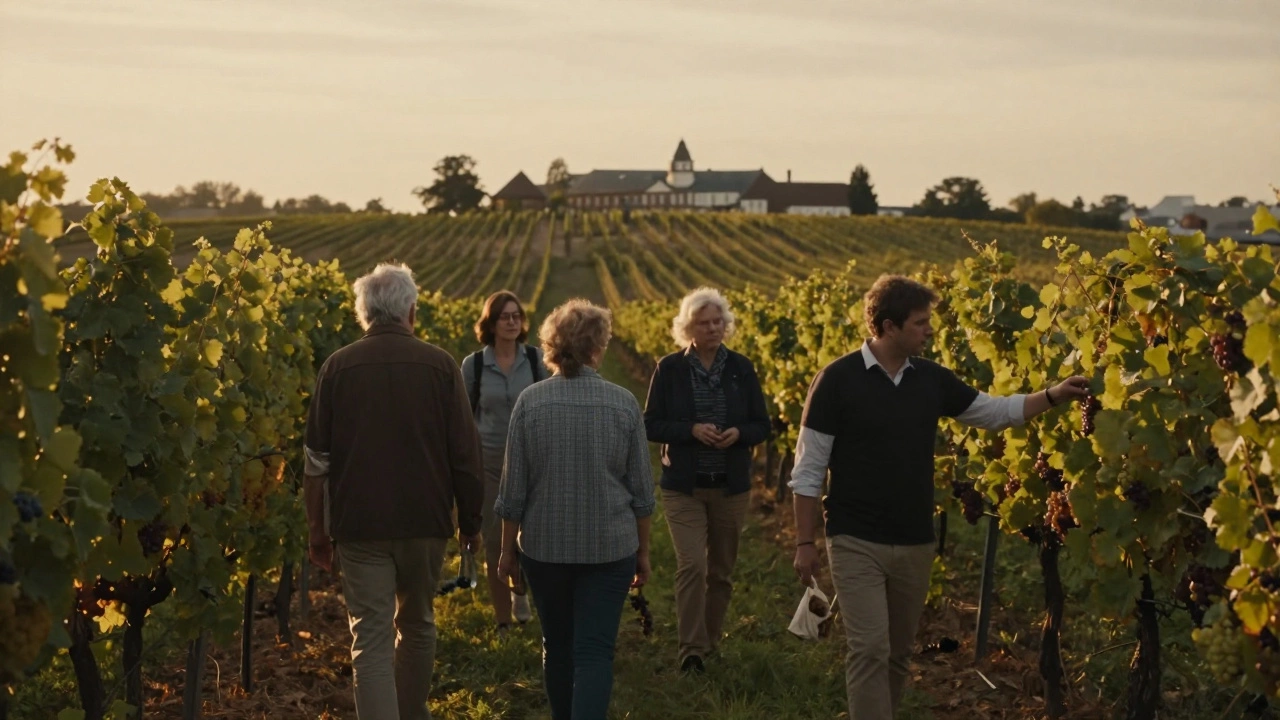
- With a vineyard tour: 90-150 minutes. Walking among the vines, seeing how the grapes grow, stopping at the fermentation tanks - this adds 30 to 60 minutes. If the tour includes a cellar walk-through, you’re looking at two hours easily.
- Private group tasting: 60-120 minutes. Smaller groups get more attention. More questions. More stories. More time. A group of four might spend 90 minutes on five wines because the host tailors the experience.
Here’s the thing: if a winery says “30-minute tasting,” they’re not lying. But they’re also not telling you the whole story. That 30 minutes means “we’ll pour and move fast.” You’ll leave knowing what you tasted - but not why it tasted that way.
Why You Shouldn’t Rush
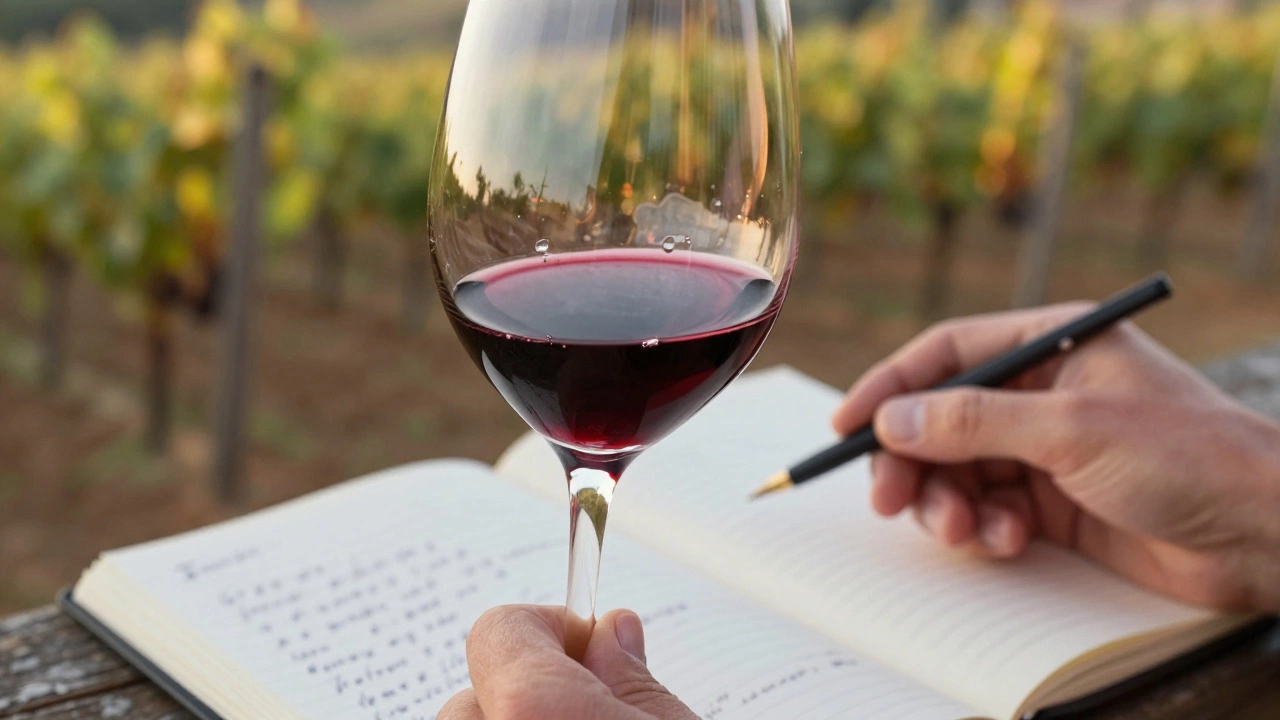
Some people think spitting is weird. Others think it’s rude. But it’s the smartest thing you can do. A standard pour is 1-2 ounces. A full glass is 5 ounces. If you swallow every sip during a 6-wine tasting? That’s 12 ounces of wine. Nearly two full bottles. You’ll be buzzed before lunch. And guess what? Your palate gets dull. The next wine tastes flat. You miss the nuances. You can’t tell if it’s oak or smoke. You just feel warm.
Spitting isn’t about being polite. It’s about tasting better. Professionals do it. Experts do it. And if you want to actually learn something? You should too.
And don’t forget: your stomach matters. Tasting on an empty stomach? Bad idea. Wine hits your bloodstream faster. You’ll feel the alcohol before you even notice the tannins. Most wineries recommend eating a light meal - cheese, bread, olives - before you start. It slows absorption. Keeps your palate sharp. Makes every wine more interesting.
Costs and What You Get
Most standard tastings cost between $15 and $25. Premium ones? $40-$75. Some places waive the fee if you buy a bottle. That’s common. But don’t assume it’s automatic. Always ask. And if you’re doing a tasting tour across multiple wineries? Plan for $100-$200 total just on fees - not including bottles.
What are you paying for? Not just the wine. You’re paying for:
- A sommelier or winemaker explaining the process
- Access to limited-release wines you won’t find in stores
- Insight into terroir, climate, and winemaking choices
- A chance to talk with other wine lovers
It’s not a bar. It’s a classroom. And the lesson? How wine changes - even within the same grape - depending on where it’s grown.
Planning Your Day
If you’re doing a winery tour, here’s the real math:
- One tasting: 75 minutes
- Travel between wineries: 15-30 minutes (traffic, hills, winding roads)
- Buffer time: 15 minutes (bathroom, photos, buying bottles)
That’s 105-120 minutes per stop. So if you want to hit three wineries? You’re looking at 5 to 6 hours. Four? 7 to 8 hours. That’s a full day. And that’s why most people stick to three.
Pro tip: Book ahead. Especially on weekends. Wineries cap group sizes. Walk-ins often get turned away. And if you show up without a reservation? You might get a rushed, 30-minute slot - or worse, be asked to wait an hour.
Also: designate a driver. Or use a tour service. Or Uber. Wine tasting isn’t a solo adventure. It’s a shared experience. And you don’t want to be the one who can’t remember the name of the vineyard because you swallowed too much.
What Happens After?
At the end of a good tasting, you won’t just leave with a bottle. You’ll leave with context. You’ll know why one Pinot Noir tastes like cherries and another tastes like wet leaves. You’ll recognize the difference between a cool-climate Chardonnay and a warm one. You’ll understand why some wines need to breathe, and others don’t.
That’s the real value. Not the wine. The knowledge.
Categories