Oktoberfest Date & Beer Estimator
📅 Festival Date Calculator
Enter a year to see when the festival opens and closes.
🍺 Beer Consumption Estimator
Estimate total liters consumed based on attendance.
Based on average of ~1 liter per person
You’ve probably noticed the glitch. You buy a ticket for Oktoberfest, the world's largest Volksfest held annually in Munich, Germany, expecting an October celebration. Instead, you’re standing in a beer tent in mid-September, sweating under a Bavarian sun. It feels like a marketing error or a calendar mix-up. But there is no mistake here. The name sticks to the event like glue, even though the dates have drifted centuries ago.
The short answer? Tradition clings to names long after the reasons for them vanish. The longer answer involves royal weddings, medieval brewing laws, and a desperate need for better weather. Let’s unpack why this massive cultural export keeps its October label while living almost entirely in September.
The Royal Wedding That Started It All
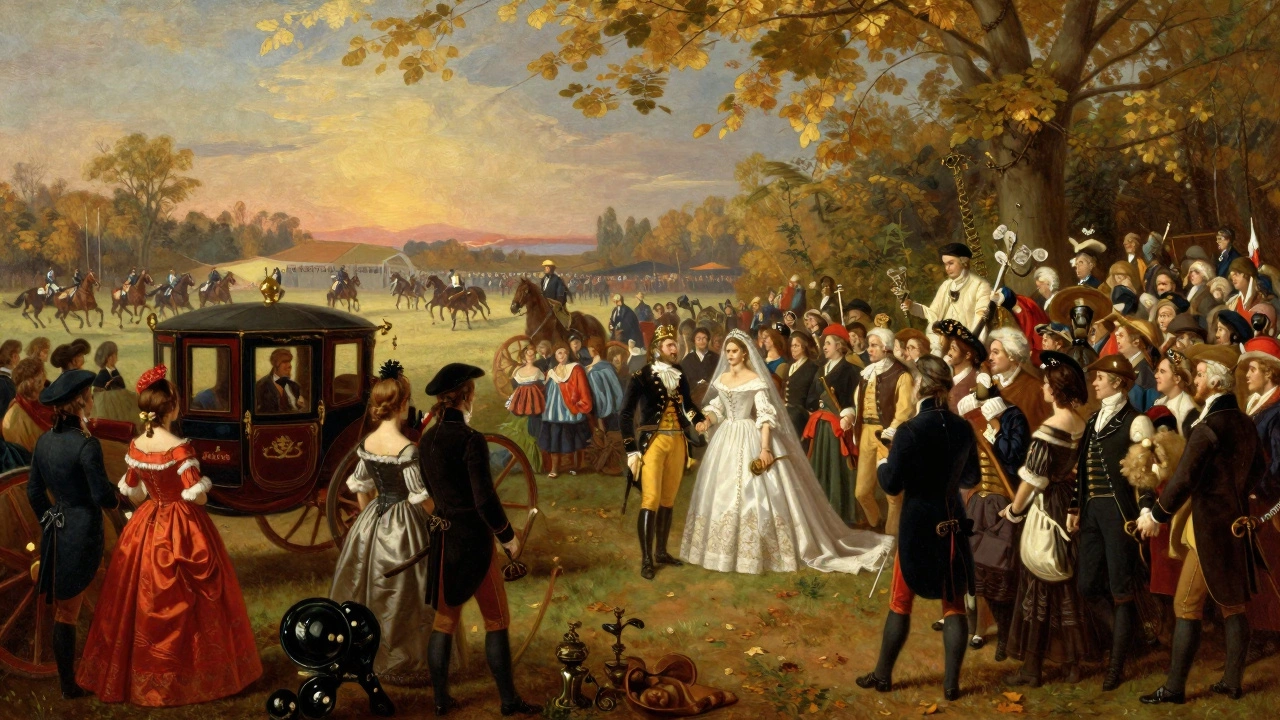
To understand the name, you have to go back to 1810. Crown Prince Ludwig of Bavaria was getting married. His bride was Princess Therese of Saxe-Hildburghausen. They didn’t just want a quiet church ceremony; they wanted a party that would make history. On October 12, 1810, the city of Munich threw open its gates for a five-day celebration.
The highlight wasn’t a toast with wine. It was a horse race. Thousands of citizens gathered on a meadow outside the city gates to watch the equestrian games. This meadow was named Theresienwiese, the festival grounds in Munich named after Princess Therese (Therese’s Meadow) in honor of the bride. Locals still call it "die Wiesn" today. The festivities ended on October 17. Because it happened in October, people called it the October Festival. Or, in German, Oktoberfest.
Ludwig and Therese were so pleased with the turnout that they promised to repeat the celebration every year to commemorate their anniversary. For the first few years, the festival stayed true to its roots. It was held in October. The name fit the date perfectly. No one complained because there was nothing to complain about.
The Beer Problem Before Refrigeration
If the wedding started the tradition, beer cemented it. But here is where things get tricky. In the early 19th century, brewing technology was limited. You couldn’t just turn on a fridge and keep beer cold all summer long. Bacteria and heat would spoil the brew quickly. Brewing during the hot months was essentially useless.
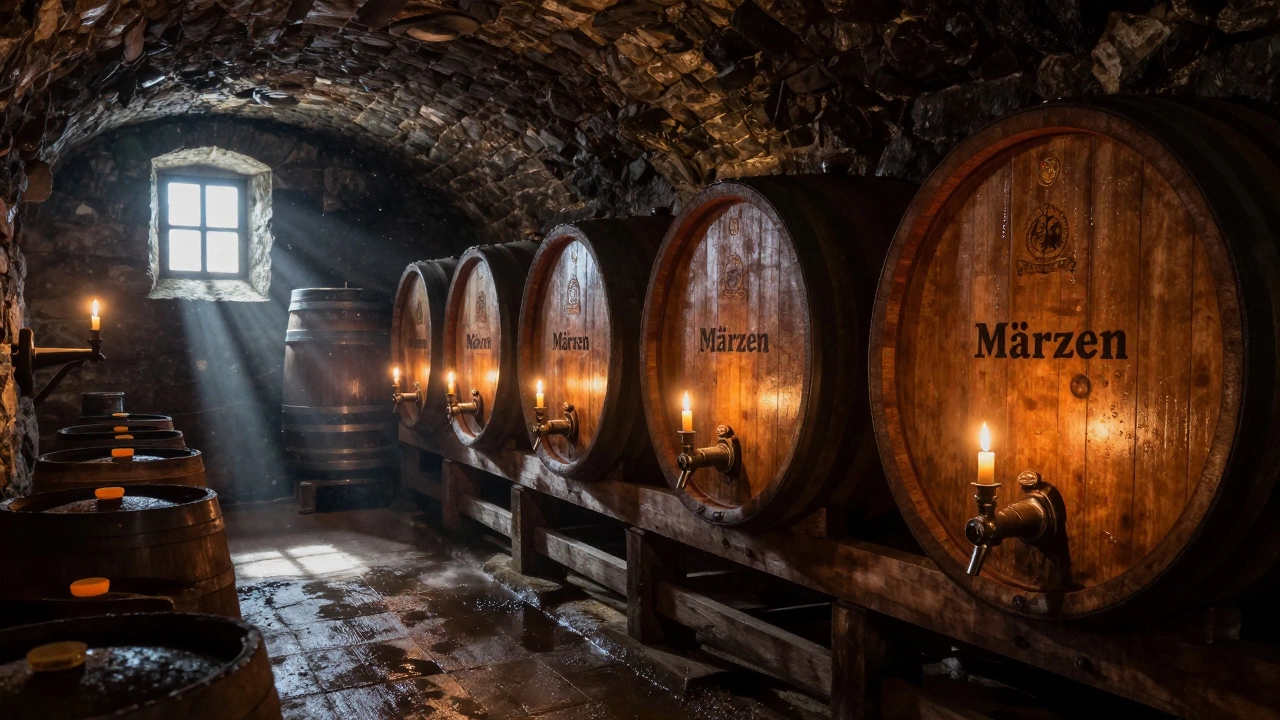
Bavarian brewers had a workaround. They brewed heavily in the spring and stored the beer in cool cellars or caves over the summer. This specific style of beer was called Märzen, a traditional amber lager originally brewed in March and stored through summer. Yes, "Märzen" means "March." These beers had higher alcohol content, which acted as a natural preservative. By autumn, these kegs needed to be emptied to make room for the new harvest grain arriving in October.
This created a natural deadline. The old beer had to go before the new grain came in. A beer-drinking festival in late September made logistical sense for brewers. They could drain their winter stocks and celebrate the end of the storage season. This ancient brewing cycle merged with the royal wedding tradition. The festival began to drift earlier in the calendar year, but the name Oktoberfest remained frozen in time.
Chasing the Sun: Why September Won
Logistics played a role, but comfort ruled the day. As the festival grew throughout the 19th century, organizers realized that October in Bavaria can be brutal. It gets cold. Fast. Imagine sitting in an outdoor beer garden at night when the temperature drops near freezing. Not exactly conducive to drinking six liters of beer.
September, on the other hand, offers longer daylight hours and warmer evenings. Visitors could stroll across the fields, enjoy the fairgrounds, and linger in the tents without shivering. The shift wasn’t sudden. It was a gradual migration. Over decades, the opening days moved further into September to capture those golden autumn days. By the late 1800s, the bulk of the festival was firmly planted in September.
The name never changed. Why? Because "Oktoberfest" was already famous. It was a brand. Changing the name to "Septembefest" would have confused everyone and lost the historical connection to the 1810 wedding. The identity was stronger than the calendar.
How the Dates Work Today
Today, the schedule is rigid. Since 1994, Oktoberfest has typically lasted 16 to 18 days. It starts on a Saturday in mid-September-usually between the 15th and 21st-and ends on the first Sunday in October. There is one exception: if that first Sunday falls before October 3 (German Unity Day), the festival extends until October 3.
This structure honors both the practical need for good weather and the historical anchor to October. The festival always concludes in October, keeping a foot in the month that gave it its name. For most visitors, however, the experience is purely a September affair. The peak attendance happens in the last two weeks of September, when the crowds are thickest and the atmosphere is electric.
| Era | Timing | Reason for Timing |
|---|---|---|
| 1810-1850s | Mid-to-Late October | Original wedding anniversary date |
| 1860s-1890s | Gradual shift to late September | Warmer weather and brewing logistics |
| 1900s-Present | Mid-September to early October | Optimized for tourism and climate |
The Role of Beer Brands
Beer isn’t just a drink at the festival; it’s the star. Only six breweries are allowed to serve beer at Oktoberfest: Augustiner, Hofbräu, Löwenbräu, Spaten, Hacker-Pschorr, and Paulaner. These breweries must follow strict guidelines. The beer served is usually a special Festbier, a slightly darker and maltier version of the standard Märzen.
The quality control is intense. Every batch is tested by independent experts. If the beer doesn’t meet the standards, it doesn’t get poured. This reputation for excellence draws millions. In 2023, over 7 million visitors attended, consuming more than 7 million liters of beer. The sheer scale makes the scheduling precision critical. You can’t afford bad weather ruining a multi-million euro event.
More Than Just Beer
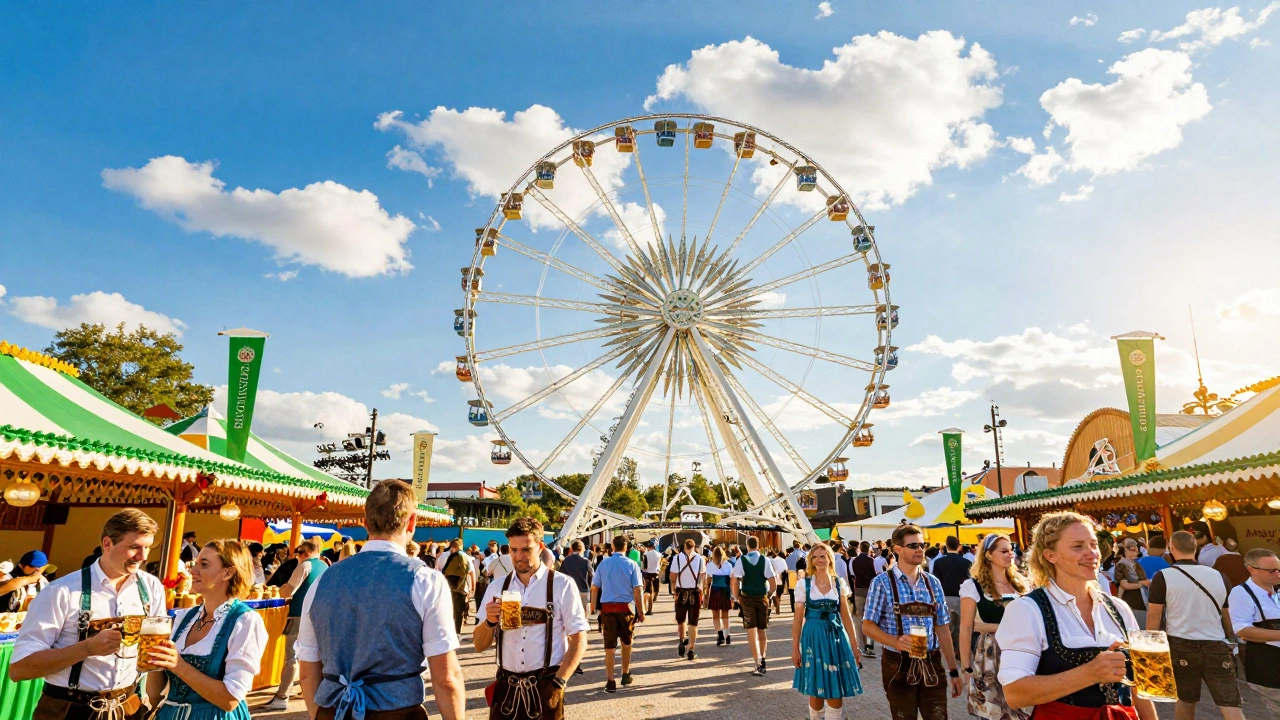
While the beer dominates the headlines, Oktoberfest is also a massive amusement park. The fairgrounds feature towering rides, including the iconic Riesenrad, the giant Ferris wheel at Oktoberfest offering views of Munich. Food stalls serve traditional Bavarian dishes like Schweinshaxe (roasted pork knuckle) and Brezn (giant pretzels). The combination of food, fun, and fermentation creates a unique cultural experience that transcends the calendar discrepancy.
The festival has faced interruptions. Wars, cholera outbreaks, and recently the COVID-19 pandemic caused cancellations in 2020 and 2021. Despite these breaks, the tradition holds strong. The return in 2022 saw record-breaking attendance, proving that the demand for this specific cultural moment remains undiminished.
Why the Name Never Changed
In a world where rebranding is constant, Oktoberfest stands as a testament to historical inertia. The name serves as a link to the past. It reminds attendees that this isn’t just a party; it’s a continuation of a 214-year-old tradition. Changing the name would sever that tie. It would reduce the event to a mere seasonal gathering rather than a historic institution.
Furthermore, the global recognition of "Oktoberfest" is invaluable. Cities around the world-from Kansas City to Melbourne-host their own versions. They all use the same name, regardless of when they hold their events. Some occur in August, others in November. The name has become detached from the specific month, evolving into a symbol of Bavarian culture itself.
So, when you raise your stein in September, remember that you’re participating in a ritual that started in October, evolved due to beer science, and settled for sunshine. The name is a relic, but the experience is very much alive.
Is Oktoberfest only in September?
No. While the majority of the festival takes place in September, it always ends in early October. Typically, it runs from mid-September to the first Sunday in October. If that Sunday is before October 3, it extends to October 3.
Why did the dates move from October to September?
The dates shifted primarily due to weather. September offers warmer temperatures and longer daylight hours, making it more comfortable for outdoor celebrations. Additionally, historical brewing practices required emptying beer kegs before the October grain harvest.
What beer is served at Oktoberfest?
Only six Munich breweries are permitted to serve beer at the official festival. They serve a special Festbier, which is a variant of the traditional Märzen style. The beer must meet strict quality controls set by the city of Munich.
When was the first Oktoberfest held?
The first Oktoberfest was held on October 12, 1810, to celebrate the marriage of Crown Prince Ludwig and Princess Therese. It concluded with a horse race on October 17.
Can I attend Oktoberfest in other countries?
Yes, many cities worldwide host their own Oktoberfest celebrations. However, these are separate events and not part of the official Munich festival. They may occur at different times of the year depending on local preferences.

Categories