Gin vs Wine Health Comparison Tool
Compare the health implications of gin versus wine based on scientific research. This tool highlights the differences in calorie content, alcohol concentration, and beneficial compounds like polyphenols.
Health Comparison Results
Calories Consumed
Gin (1.5 oz shot): 97 calories
Total weekly calories from gin: 0
Wine (5 oz glass): 120 calories
Total weekly calories from wine: 0
Alcohol Content
Gin: 40-57% alcohol by volume
Weekly ethanol: 0 grams
Wine: 12-15% alcohol by volume
Weekly ethanol: 0 grams
Polyphenol Content
Gin polyphenols: 0 mg/L
Wine polyphenols: 0 mg/L
Gin contains less than 10 mg/L of polyphenols. Red wine contains 1,000-2,000 mg/L.
Key Health Differences
Gin
Contains trace antioxidants but not enough for meaningful health benefits. Alcohol is a known carcinogen.
Wine
Contains polyphenols (resveratrol, anthocyanins) that may reduce inflammation and heart disease risk markers.
Health Risk Summary
Both gin and wine contain ethanol, a known carcinogen. No level of alcohol consumption is safe for health.
However, wine may have slightly more protective compounds that reduce specific inflammation markers.
Let’s be clear: gin is not the healthiest liquor. Not even close. If you’ve heard this claim - maybe from a trendy bar, a social media post, or even a well-meaning friend - it’s time to set the record straight. Gin might be crisp, aromatic, and full of botanical charm, but calling it healthy? That’s marketing, not medicine.
Where Did This Myth Come From?
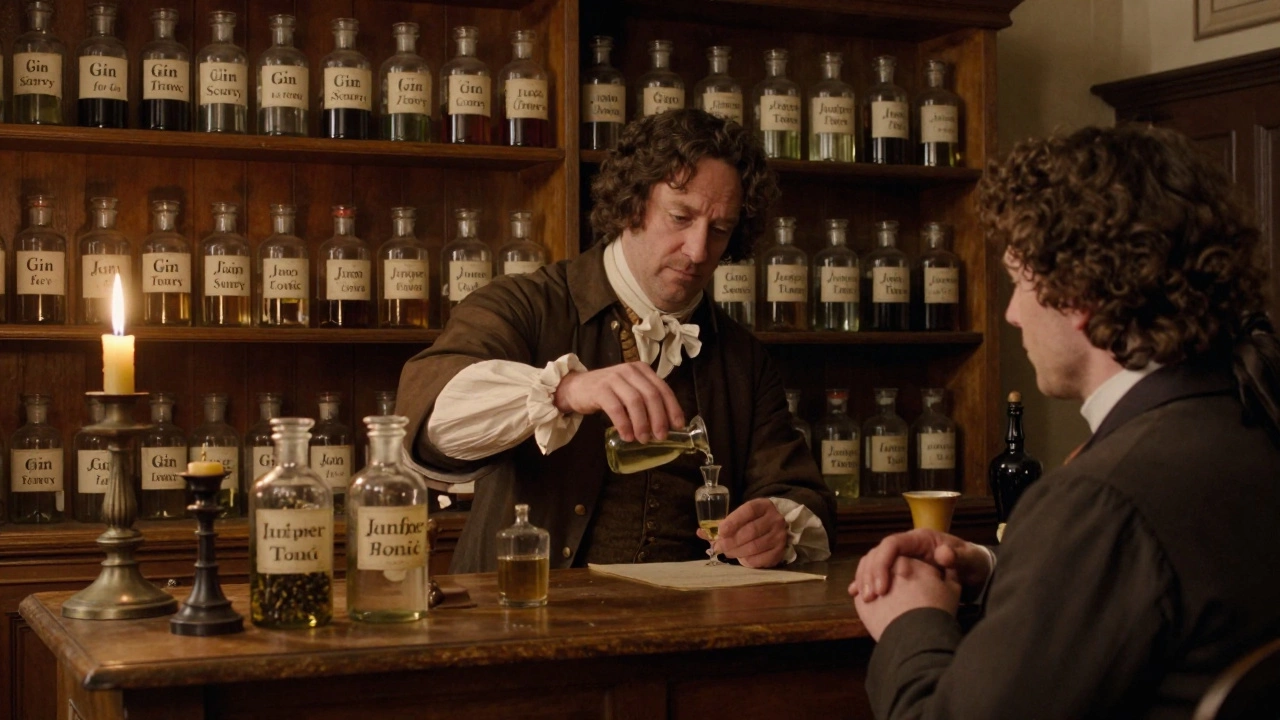
The idea that gin is good for you didn’t start in a lab. It started with juniper berries. These tiny green cones have been used for thousands of years - ancient Egyptians wrote about them in 1500 BC for digestive troubles. Fast forward to the 17th century, and Dutch sailors were drinking genever (gin’s ancestor) to ward off scurvy and stomach bugs. When gin hit England in the 1700s, it was sold as a medicinal tonic. People believed it cured everything from gout to the plague. Today, you’ll still hear stories: “Gin-soaked raisins help my arthritis.” “Juniper clears my sinuses.” “It’s low-calorie, so it’s better for me.” These aren’t lies - they’re echoes of old folklore, wrapped in modern branding. Brands like Hendrick’s and Sipsmith lean into this, highlighting cucumber, rose, or coriander as if they’re superfoods. But here’s the truth: the amount of these botanicals in a single glass is so tiny, it’s biologically meaningless.What’s Actually in a Shot of Gin?
A standard 1.5 oz shot of gin is about 97 calories. Zero sugar. Zero carbs. That’s why people comparing it to beer or sweet cocktails think they’re making a “healthier” choice. And yes - if you’re trying to cut calories, gin with soda water and lime beats a sugary margarita or a pint of IPA (which can hit 200+ calories). But calories aren’t the whole story. Gin is 40-57% alcohol by volume. That’s ethanol. Pure, distilled ethanol. And ethanol - no matter where it comes from - is a toxin. Your liver breaks it down into acetaldehyde, a known carcinogen. The World Health Organization says no level of alcohol consumption is safe for your health. That includes gin. And while juniper berries contain trace antioxidants, you’d need to drink liters of gin to get even a fraction of the polyphenols found in a single glass of red wine. A 2021 study in the Journal of Agricultural and Food Chemistry found gin has less than 10 mg/L of polyphenols. Red wine? 1,000-2,000 mg/L. That’s a 100x difference.Gin vs Wine: The Real Health Comparison
Let’s look at what science actually says. In a 2004 study published in the Journal of the American College of Cardiology, researchers gave 40 healthy men either 30g of ethanol from wine or gin daily for four weeks. Both drinks lowered some inflammation markers - but only wine reduced key markers linked to heart disease: hs-CRP, VCAM-1, and ICAM-1. Why? Polyphenols. Resveratrol. Anthocyanins. These are compounds found in grape skins, and they’re absent in gin. A 2006 study in Atherosclerosis showed that after drinking wine, participants had lower LDL cholesterol and reduced expression of pro-inflammatory genes. Gin? No significant change. Harvard’s Nutrition Source and the European Food Safety Authority both say the heart benefits linked to moderate drinking come from wine - not spirits. Even the American Heart Association doesn’t say “gin is better.” They say: “If you don’t drink, don’t start.” And if you do? Stick to one drink a day for women, two for men - and know that no type of alcohol is a health supplement.
What About the Botanicals? Juniper, Coriander, Citrus?
Yes, gin is made with juniper, coriander, angelica root, citrus peel - some distillers even throw in lavender or rose petals. But here’s the catch: you’re not eating a whole juniper berry. You’re sipping a tiny fraction of its essence, dissolved in 40% alcohol. The amount of active compounds in a glass is negligible. The European Food Safety Authority rejected health claims for juniper-based products in 2020, stating: “No cause-and-effect relationship has been established between juniper berry consumption and normal blood glucose levels.” Translation: no proof it helps your metabolism, your blood sugar, or your immune system. And let’s not forget: alcohol interferes with your body’s ability to absorb nutrients. It can damage your gut lining, disrupt sleep, and raise blood pressure. None of that gets fixed by a hint of lemon zest.Why Do People Still Believe This?
Because it feels good. We want our vices to be good for us. We want to believe that sipping a gin and tonic while watching the sunset is a wellness ritual. And gin distilleries - especially in places like Edinburgh, London, or the Pacific Northwest - lean into this. Tour guides talk about “ancient healing herbs,” “botanical balance,” and “natural purity.” But here’s what they don’t tell you: you can’t get health benefits from something that’s 40% ethanol. The same way you can’t get fiber from a shot of whiskey. The same way you can’t get vitamin C from a glass of vodka. The real benefit of a gin distillery tour? Learning how it’s made. Smelling the botanicals. Tasting the subtle differences between a London dry and a navy strength gin. Appreciating craftsmanship. That’s the real value - not some magical health claim.





Categories