Tea Etiquette Myth-Buster Quiz
Think you know how to hold a teacup? Discover if the "pinky up" pose is elegant or embarrassing with this quick quiz.
Loading question...
Quiz Complete!
You are ready for afternoon tea.
You have seen it in every period drama, every satirical cartoon, and probably at that one fancy hotel afternoon tea you attended last year. A character lifts a delicate porcelain cup, their little finger jutting out into the air like a rigid antenna. It looks elegant, doesn't it? Or maybe it looks ridiculous. Here is the uncomfortable truth: if you are raising your pinky while drinking tea today, you are likely doing it wrong. In fact, most modern etiquette experts consider it a faux pas rather than a sign of refinement.
So why does this gesture persist? Is it a secret code from Victorian aristocrats, or just a bad habit we picked up from Hollywood? Let's break down where this myth came from, what actually happened in history, and how you should really be holding your cup.
The Short Answer: It’s Mostly a Myth
Let's clear the air immediately. According to major etiquette authorities like Emily Post, who defined American manners for decades, and Miss Manners (Judith Martin), extending the pinky finger is not correct etiquette. They explicitly state that the pinky should remain relaxed and curled naturally with the other fingers. Raising it is often viewed as affected, snobbish, or simply trying too hard to look sophisticated.
If you want to blend in at a proper tea service in Edinburgh or London, keep that pinky down. But knowing *why* people started doing it in the first place is fascinating because it has nothing to do with showing off class-at least, not originally.
The Practical Origin: Hot Cups and No Handles
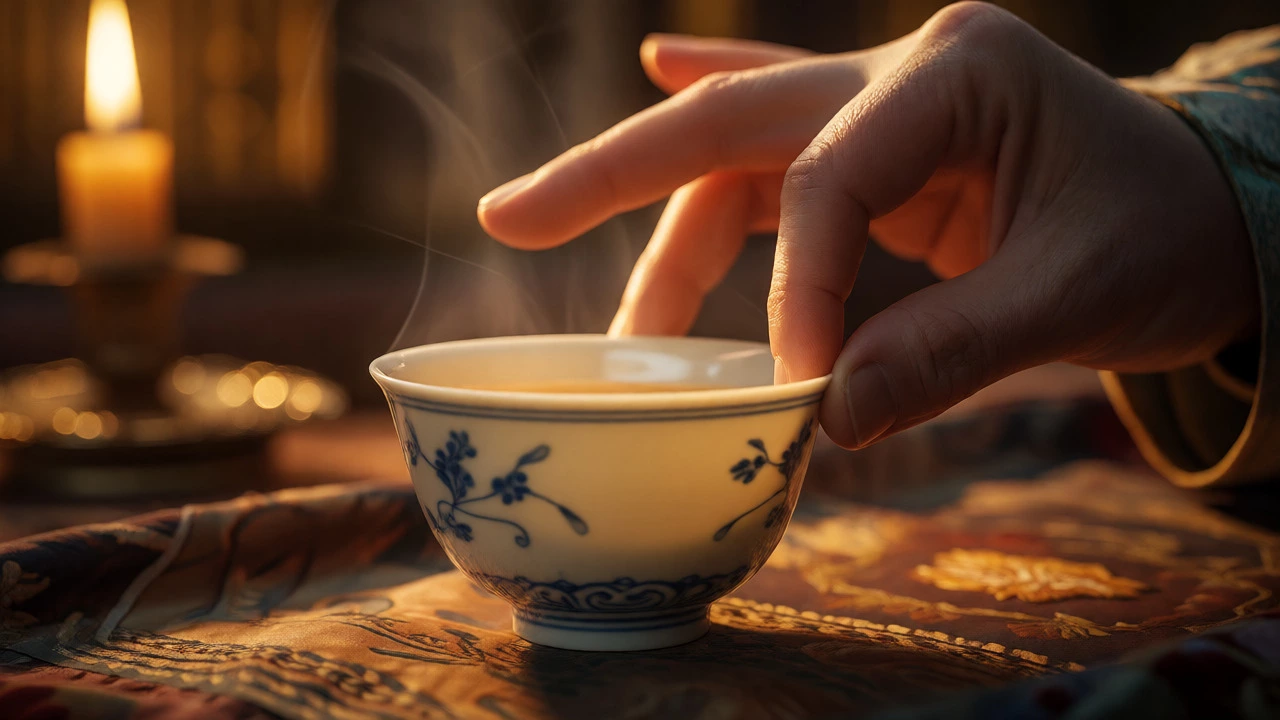
To understand the pinky-up pose, you have to travel back to the 17th century. When tea first arrived in Europe from China, it was an expensive luxury reserved for the wealthy. More importantly, the cups were completely different from what we use today. Early European tea drinkers used handleless porcelain bowls imported from Asia. These vessels were small, thin, and filled with scalding hot liquid.
Imagine holding a tiny, handleless bowl full of boiling water. If you wrap all five fingers around it, you will burn your hand instantly. The only way to hold these cups without burning yourself was to pinch the rim with just two or three fingers-typically the thumb, index, and middle finger. What happened to the ring finger and pinky? They had nowhere to go but away from the heat source. They lifted naturally to avoid contact with the hot porcelain.
| Era | Cup Design | Hand Position Reason | Pinky Status |
|---|---|---|---|
| 1650-1700s | Handleless Chinese Porcelain | Avoiding burns on hot rim | Naturally lifted due to heat |
| 1800s | Wide, low bowls (European) | Balancing unstable base | Used for counterbalance |
| Modern Day | Small cups with handles | Gripping the handle securely | Should be relaxed and down |
This practical necessity became visually associated with the upper classes, who were the only ones drinking tea at the time. Over generations, the physical act of lifting the finger to stay cool morphed into a symbolic gesture of status. People began mimicking the posture not because they were hot, but because they wanted to look like they belonged to that exclusive club.
The Balance Theory: Wide Cups and Spill Prevention
Another compelling theory involves the shape of teacups in the 19th century. Before tall, narrow mugs became standard, many European teacups were wide and shallow with flat bottoms. These shapes were notoriously unstable. If you held such a cup loosely, it wobbled dangerously.
Some historians suggest that extending the pinky acted as a counterbalance, similar to how a tightrope walker uses a pole. By sticking the little finger out, drinkers could stabilize the cup and prevent spills. While this sounds plausible, etiquette researchers note that there is no formal rulebook from the era that mandates this technique. It was likely a personal adaptation by individuals struggling with clumsy grip, which then got copied by others who thought it looked intentional and refined.
The Class Signaling Trap: Three Fingers vs. Five
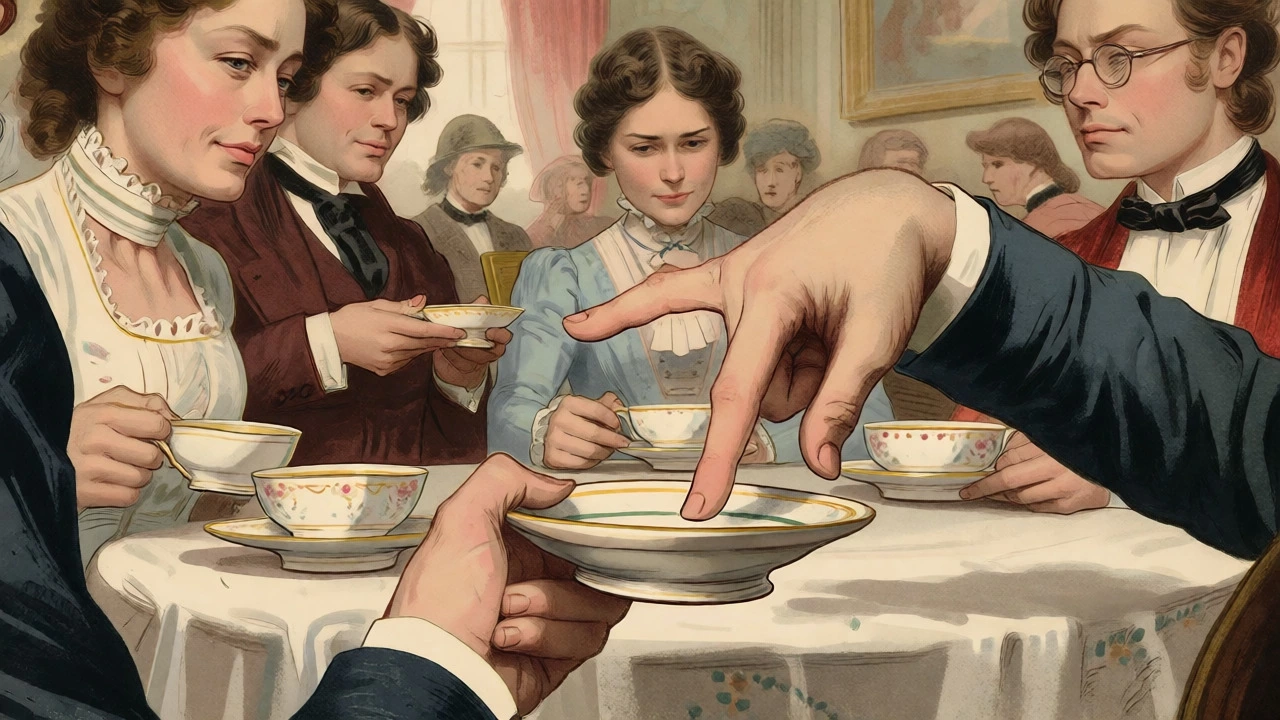
There is a deeper social layer to this behavior. In earlier centuries, eating habits were strictly divided by class. "Cultured" diners ate delicate foods using only three fingers, keeping the ring and pinky fingers tucked away or raised slightly to show they didn't need them. Commoners used all five fingers to grab food.
As tea culture spread to the middle classes, people tried to imitate aristocratic mannerisms. However, they misunderstood the nuance. Instead of simply relaxing the hand, they exaggerated the lift of the pinky, turning a subtle distinction into a blatant display. Servants and aspiring elites began copying the pose, often overdoing it. This created a feedback loop where the more you raised your pinky, the more "high-class" you appeared to be, even if it looked comical to those who knew better.
Hollywood Made It Famous (and Wrong)
If historical origins explain the start, media explains its persistence. Throughout the 20th century, filmmakers and cartoonists needed a quick visual shorthand to signal "snobbery" or "pretentiousness." How do you show a character thinks they are better than everyone else? You make them drink tea with their pinky up.
Think of characters like Frasier Crane or the villains in Disney movies. The raised pinky became a caricature of elitism. Because we see this image so often in pop culture, our brains associate it with sophistication, even though real etiquette experts reject it. We learned the wrong lesson from the screen. We thought the gesture meant elegance; in reality, it often meant mockery.
The Versailles Syphilis Legend: Fun but Unproven
You might have heard a wild story circulating on social media about King Louis XIV's court at Versailles. The legend claims that courtiers suffering from syphilis-a common disease in the 17th century-raised their pinkies to signal to potential lovers that they were infected. Since syphilis caused skin lesions on hands, keeping the pinky extended supposedly hid the symptoms while signaling danger.
While this story is entertaining, most historians dismiss it as apocryphal. There is no solid archival evidence linking the specific tea-drinking posture to a medical warning system in France. It serves more as a fun anecdote than a factual explanation for the global phenomenon of pinky-up tea drinking.
How to Hold Your Cup Correctly Today
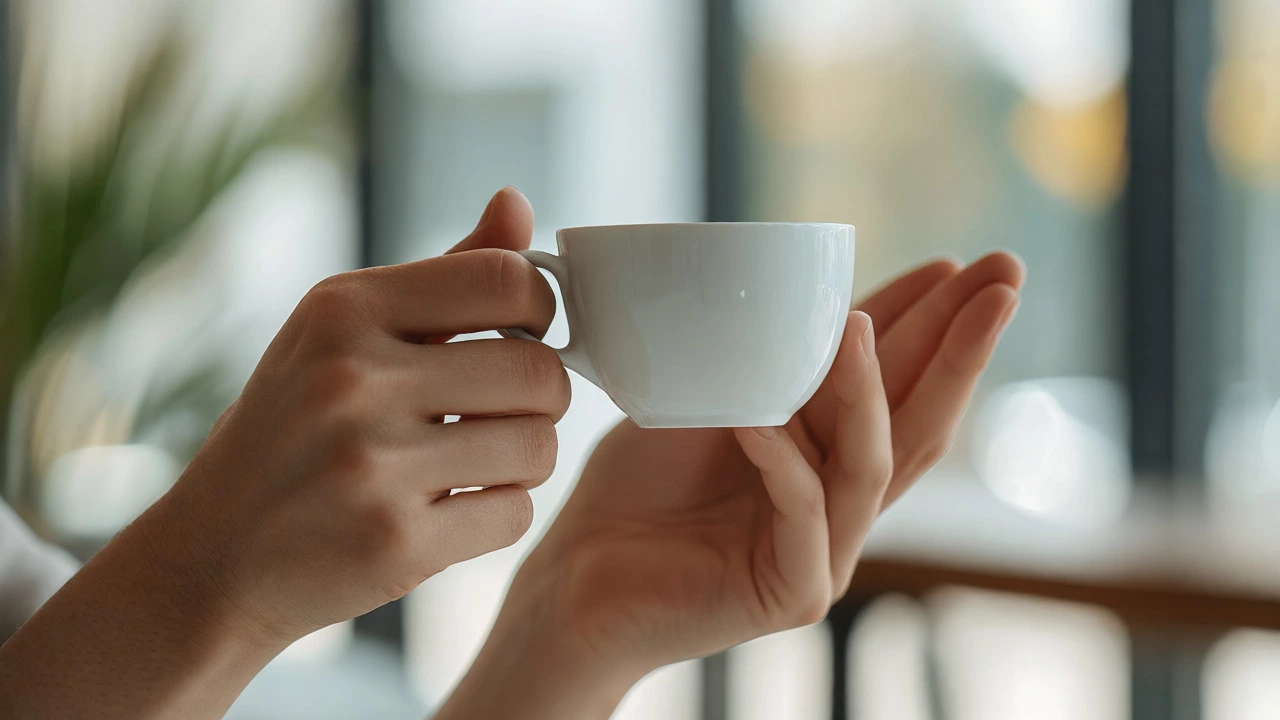
Now that we know the pinky-up is mostly a myth, let's fix your grip. Modern teacups have handles for a reason. They exist to keep your fingers away from the hot ceramic and to provide a secure point of contact.
- The Grip: Pinch the handle between your thumb and index finger. Your middle finger can support the bottom of the handle or rest gently against the side.
- The Rest: Allow your ring finger and pinky to curl naturally inward. They should follow the curve of your hand, resting lightly against each other or the cup itself.
- The Elbow: Keep your elbow close to your body. Lifting your elbow high while raising your pinky creates a large, distracting silhouette that draws attention to your arm rather than your conversation.
- The Sip: Take small sips. Do not slurp (unless you are a professional tea taster evaluating flavor notes) and do not blow on the tea excessively.
Notice that none of these steps require you to extend a single finger into the air. The goal of good etiquette is to make others comfortable, not to draw attention to your own performance.
When Is It Okay to Lift Your Pinky?
Are there exceptions? Technically, yes, but they are rare. If you are holding a handleless cup (like a traditional Japanese chawan), your fingers might naturally lift to avoid heat. In that case, it is functional, not affectation. Similarly, if you have a physical disability that affects your grip, your natural hand position takes precedence over arbitrary rules.
But for the average person holding a standard handled mug or fine china teacup? Keep it down. If you feel awkward, practice holding your cup in front of a mirror. Watch how your hand relaxes when you stop trying to "perform" elegance. You will find that a relaxed hand looks far more confident than a stiff, pointed one.
Final Thoughts: Etiquette Is About Comfort, Not Performance
The next time you sit down for a cuppa, remember that true refinement isn't about following outdated gestures from a bygone era. It is about being present, engaging with your companions, and enjoying the drink. The pinky-up myth persists because it is easy to spot and easy to mock, but it lacks substance. Don't let Hollywood dictate your table manners. Relax your hand, lower your pinky, and enjoy your tea.
Is raising my pinky considered rude?
It is generally considered gauche or pretentious rather than outright rude. Most people will view it as a sign that you are trying too hard to appear sophisticated, which can create social distance.
Did Victorians actually raise their pinkies?
Not consistently. While some individuals may have adopted the posture due to handleless cups or balance issues, there is no evidence that it was a universal rule. Many Victorian etiquette manuals actually discouraged excessive hand movements.
What is the correct way to hold a teacup with a handle?
Pinch the handle with your thumb and index finger. Let your middle finger support the handle from below or the side. Your ring finger and pinky should curl naturally downward, staying close to the handle or the cup.
Why do cartoons show characters raising their pinkies?
Cartoons use it as a visual shorthand for snobbery or upper-class affectation. It exaggerates the gesture to make a character seem out of touch or overly concerned with appearances.
Does the type of tea change how I should hold the cup?
Generally, no. Whether you are drinking Earl Grey, Oolong, or herbal tea, the mechanics of holding a handled cup remain the same. Only handleless vessels require a different grip to manage heat.



Categories