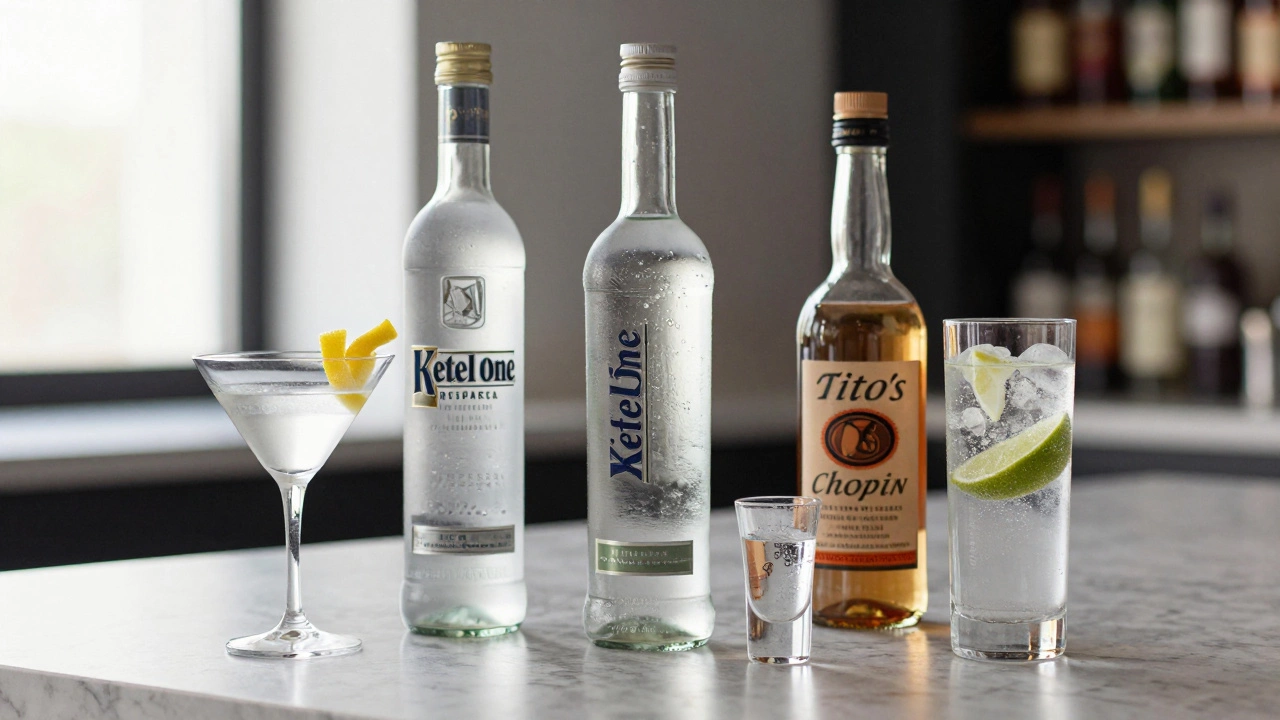
Not all vodkas are created equal. You might think it’s just clear alcohol with no flavor, but that’s where most people get it wrong. A good vodka isn’t about the bottle design or the price tag-it’s about what’s inside and how it behaves when you drink it. Whether you’re mixing a martini, sipping it neat, or just trying not to regret your next shot, knowing how to pick the right one makes all the difference.
Start with Why You’re Buying It
The first question you should ask yourself: Are you mixing it or sipping it? This single choice narrows down your options faster than any brand name ever could.If you’re making cocktails-cosmopolitans, screwdrivers, or vodka tonics-you want something clean and neutral. It shouldn’t fight with the other ingredients. Grain-based vodkas like Ketel One or Absolut work best here. They’re crisp, light, and disappear into the mix without leaving a trace of harshness.
But if you’re drinking it straight, chilled, maybe with a squeeze of lemon, you need texture. That’s where potato vodkas like Chopin come in. They’re thicker, creamier, with a subtle sweetness that lingers. You taste the grain or the potato, not just the alcohol. It’s not for cocktails. It’s for quiet moments, slow sips, and noticing the difference.
Look Beyond the Price Tag
You don’t need to spend $70 on a bottle to get a great vodka. In blind taste tests conducted by ATH Vodka in 2024, Tito’s-priced around $29-beat out several luxury brands in cocktail applications. Smirnoff, at $15, still holds up fine in punch bowls or frozen drinks. But here’s the catch: cheap vodka often shows its flaws when you drink it neat.Value brands (under $25) like Svedka or UV Vodka can taste sharp or chemical. That’s usually from poor filtration or low-quality base ingredients. Mid-range ($25-$50) is where most people find their sweet spot. Brands like Grey Goose, Belvedere, and Chopin deliver consistency, smoothness, and real character. Premium ($50+) bottles often come with stories-French wheat, diamond filtration, hand-harvested potatoes-but those stories only matter if the liquid backs them up.
Price doesn’t guarantee quality. But if a bottle costs less than $15 and claims to be “ultra-premium,” it’s probably lying.
Know Your Base Ingredient
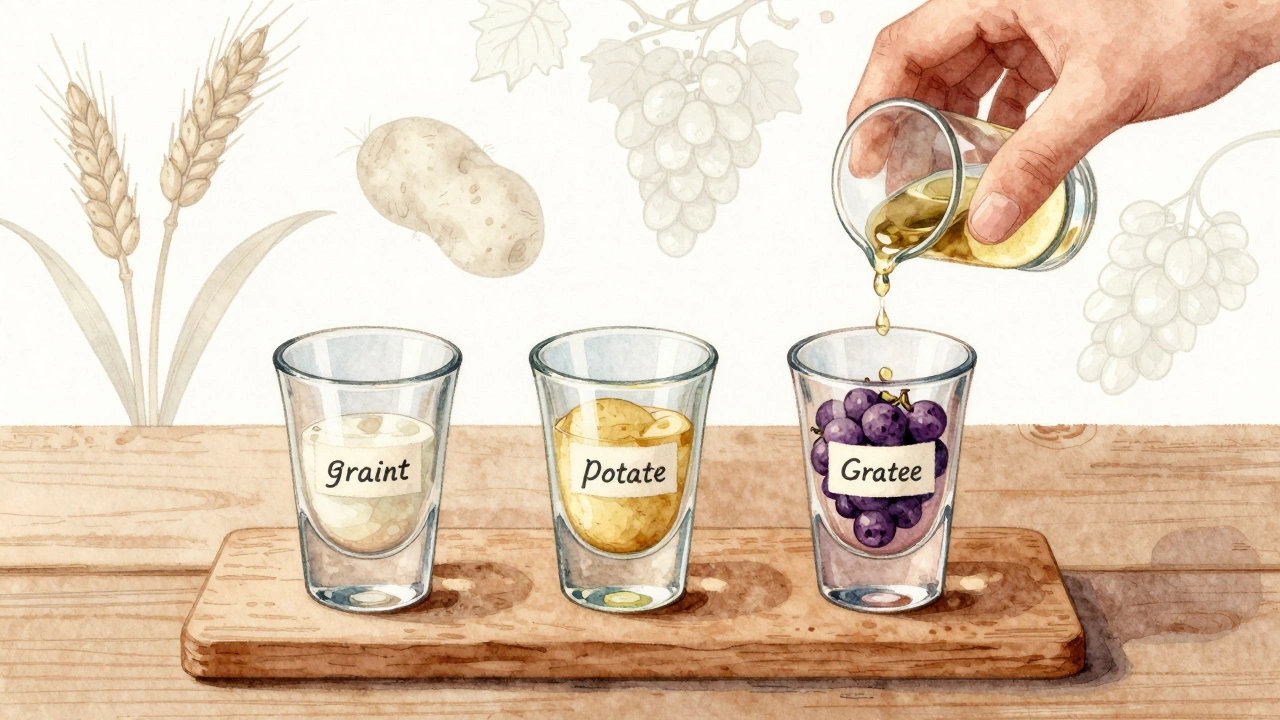
Vodka can be made from almost anything that ferments: wheat, rye, corn, potatoes, grapes, even milk whey. But each base changes the final product.- Grain (wheat, rye, barley): Clean, dry, neutral. Best for cocktails. Think Ketel One, Absolut, Grey Goose.
- Potato: Rich, oily, creamy. Perfect for sipping. Chopin and Belvedere’s potato variant are top picks.
- Grape: Surprisingly smooth with a hint of fruit. CÎROC stands out here, using French grapes from the Cognac region.
- Corn: Often found in American craft vodkas. Can be slightly sweet. Tito’s is made from 100% corn.
Don’t assume grain is always better. Potato vodkas are often more expensive because they’re harder to distill-potatoes have more impurities. But that’s also why they taste fuller. If you like the mouthfeel of a good whiskey, you’ll probably like potato vodka.
Filtration Matters More Than You Think
Distillation removes impurities, but filtration is what makes the difference between okay and outstanding. Most vodkas are filtered through charcoal-sometimes multiple times. But some brands go further.Grey Goose uses limestone-filtered water and filters once, preserving flavor instead of stripping it. Belvedere uses charcoal from Polish oak. Chopin filters through silver. Some ultra-premium brands even use diamond dust or quartz. These aren’t marketing tricks-they’re real processes that affect texture and smoothness.
Bad filtration leaves behind metallic or bitter notes. You’ll feel it on the back of your throat. Good filtration feels like cold spring water: clean, soft, no sting. That’s what you’re looking for.
How to Taste Vodka Like a Pro
You don’t need a fancy glass. Just a small shot glass, chilled in the fridge (not the freezer). Freezing masks flaws. Chilling just takes the edge off.Follow these four steps:
- Look: Hold it up to the light. It should be crystal clear. Any cloudiness means poor filtration or additives.
- Smell: Swirl it gently. You shouldn’t smell alcohol burning your nose. Good vodka smells faintly of grain, citrus peel, or even fresh bread. If it smells like paint thinner, walk away.
- Taste: Take a small sip. Let it sit on your tongue. Notice the texture. Is it thin and watery? Or does it coat your mouth? Does it burn? A good vodka warms you gently. A bad one stings like vinegar.
- Finish: Swallow. The aftertaste should fade slowly, not vanish instantly. If it leaves a sour or metallic taste, it’s low quality. The best vodkas leave a clean, quiet warmth.
Try this: Taste three vodkas side by side-say, Tito’s, Grey Goose, and Chopin. You’ll immediately see the difference. That’s how you learn.
Country of Origin Isn’t Everything-but It Helps
Russia and Poland are the historical homes of vodka. Their traditions are strict: only grain or potatoes, multiple distillations, charcoal filtration. Belvedere and Stolichnaya are great examples.Sweden’s Absolut is known for consistent quality and smoothness. France’s Grey Goose and CÎROC use premium agricultural ingredients and water sources you can trace back to specific farms. American craft vodkas are pushing boundaries-using heirloom corn, organic rye, even honey as a base.
There’s no rule that says Russian vodka is better. But if you want authenticity, look for brands that stick to traditional methods. If you want innovation, try a small-batch American or Japanese vodka.
Watch Out for These Red Flags
Some bottles look fancy but deliver nothing. Here’s what to avoid:- Flavored vodkas labeled “natural” but list sugar or artificial additives. Real flavored vodka uses real fruit or botanicals, not syrups.
- “Triple-distilled” or “ten-times filtered”. These are marketing buzzwords. One clean distillation with good filtration beats ten passes with cheap charcoal.
- Too many awards on the label. Most are from private competitions paid for by the brand. They don’t mean much.
- No information about ingredients or production. If the brand won’t tell you what it’s made from, why should you trust it?
What Experts Really Recommend
Industry insiders like Maria Bostian from The Wharf Fort Lauderdale say the best vodka is the one that fits your life. Not your Instagram feed.For cocktails under $30? Tito’s or Absolut. For sipping? Chopin or Belvedere Potato. For a special occasion? Grey Goose or CÎROC. For trying something new? Look for a local craft distillery. Many offer small bottles or tasting flights.
And here’s the secret: buy 50ml samples before committing to a full bottle. Taste it chilled. Taste it in a drink. Wait a day. See how you feel about it. Most people don’t do this. That’s why they end up with a half-empty bottle they hate.
Final Rule: Your Palate, Not the Label
There’s no “best” vodka. Only the best one for you. The market is full of options-from $12 bottles that work fine in a punch to $120 bottles that feel like liquid silk. But none of that matters if you don’t know what you’re tasting.Start with your purpose. Then your budget. Then taste. Don’t let branding or hype decide for you. Vodka is simple. It’s just water and alcohol. But the best versions? They’re crafted. And you can taste the difference.
Next time you’re at the store, skip the flashy bottles. Grab three: one grain-based, one potato, one craft. Try them. Write down what you like. That’s your personal vodka guide. And no one else’s opinion matters more than yours.
Is expensive vodka always better?
No. Many premium vodkas cost more because of marketing, packaging, or branding-not because they taste better. In blind tests, mid-range vodkas like Tito’s often outperform luxury brands in cocktails. What matters is how the vodka performs in your drink, not how much it costs.
Can you tell the difference between grain and potato vodka?
Yes, especially when sipped neat. Grain vodkas are light, crisp, and neutral-ideal for mixing. Potato vodkas are thicker, creamier, with a subtle sweetness and richer mouthfeel. If you notice a smooth, oily texture, you’re likely drinking a potato vodka. It’s not about flavor-it’s about texture.
Should I freeze my vodka?
No. Freezing masks flaws and dulls the aroma. Chill it in the fridge instead. Cold vodka is smoother, but freezing turns it into a slush that hides the real character of the spirit. You want to taste it, not numb it.
Are flavored vodkas worth it?
Only if they’re made with real ingredients. Many flavored vodkas are just alcohol with artificial syrups and sugar. Look for brands that list actual fruits, herbs, or botanicals on the label. Otherwise, it’s better to add fresh ingredients to a plain vodka yourself.
What’s the best vodka for a martini?
A clean, neutral grain vodka like Grey Goose, Belvedere, or Ketel One. You want the gin or vermouth to shine, not the vodka. Avoid anything with strong notes or texture-it’ll overpower the drink. Chill it well, and use fresh ice.
Is organic vodka better?
Not necessarily. Organic means the base ingredients were grown without synthetic pesticides, but it doesn’t guarantee better taste or purity. Some organic vodkas are excellent; others are bland. Focus on filtration, distillation, and taste-not the label.
How many tastings does it take to pick a favorite?
Most people need three to five side-by-side tastings to start recognizing the differences. Start with three vodkas: one cheap, one mid-range, one premium. Taste them the same way-chilled, neat, then in a simple mixer. Write down what you notice. Your palate will improve with each try.





Categories