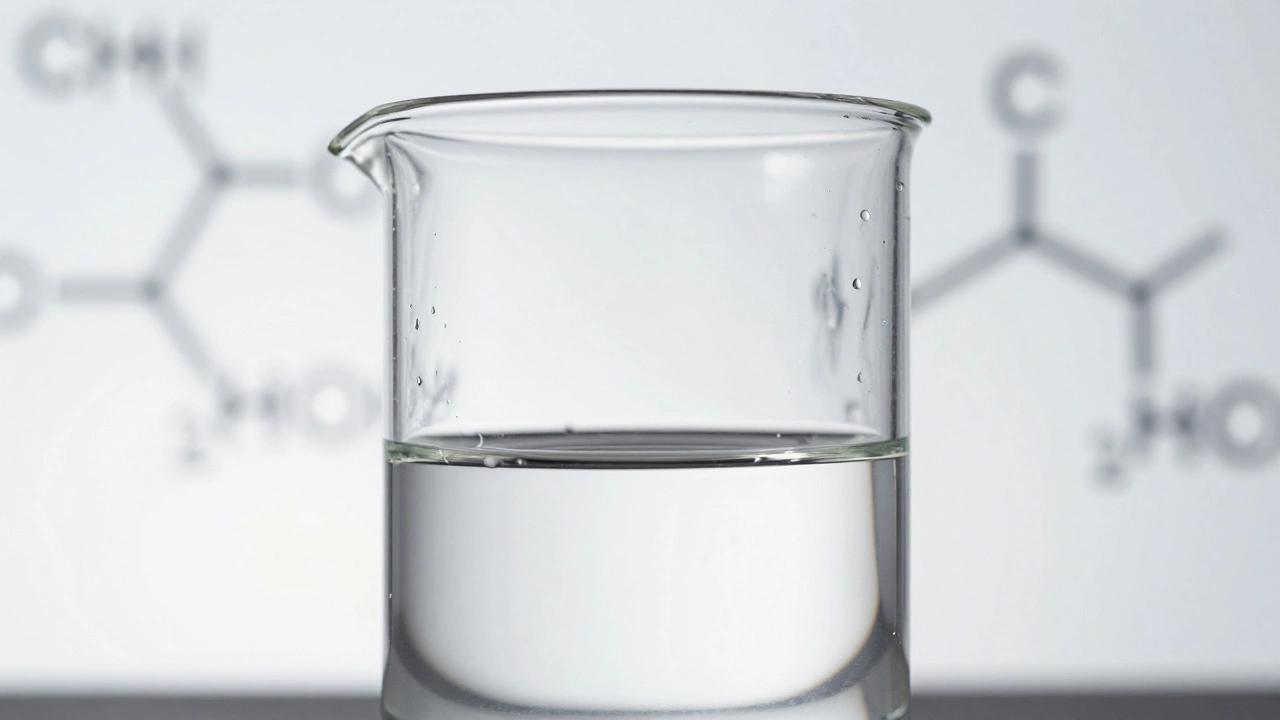
Spirit Purity & Potency Calculator
Wheat Vodka Analysis
Purity: 9/10Wheat vodkas offer a slight cereal sweetness with a soft mouthfeel, making them closer to pure spirit than rye or potato varieties.
When you ask which alcohol tastes like "spirit," you are essentially asking: what does pure ethanol taste like when stripped of its ingredients? It is a burning, slightly sweet, and bitter sensation that hits the back of your throat. Most people do not drink straight ethanol because it is harsh, but certain alcoholic beverages are engineered to be as close to this raw chemical experience as possible.
If you want the cleanest, most unadulterated taste of alcohol itself, you need to look at rectified spirits and high-quality vodka. These drinks are designed to remove everything except water and ethanol. Everything else-whiskey, gin, tequila-is built on adding flavors *on top* of that base. Here is exactly where you find the true taste of spirit, and why it varies so much from bottle to bottle.
The Purest Form: Rectified Spirit and Grain Neutral Spirit
To understand the baseline of "spirit" taste, we have to look at the industrial standard for purity. This is known as Rectified Spirit, also called Grain Neutral Spirit (GNS) or Extra-Neutral Alcohol (ENA). By definition in many regulatory bodies, this must be distilled to at least 95% alcohol by volume (ABV), or 190 proof.
At this concentration, there is virtually no room for congeners-the flavor compounds created during fermentation that give beer, wine, and whiskey their character. What remains is just ethanol and water. If you were to sip this neat, you would experience intense heat and a sharp, chemical bitterness. There is no grain sweetness, no herbal note, nothing. It is the closest thing to tasting the molecule C₂H₅OH directly.
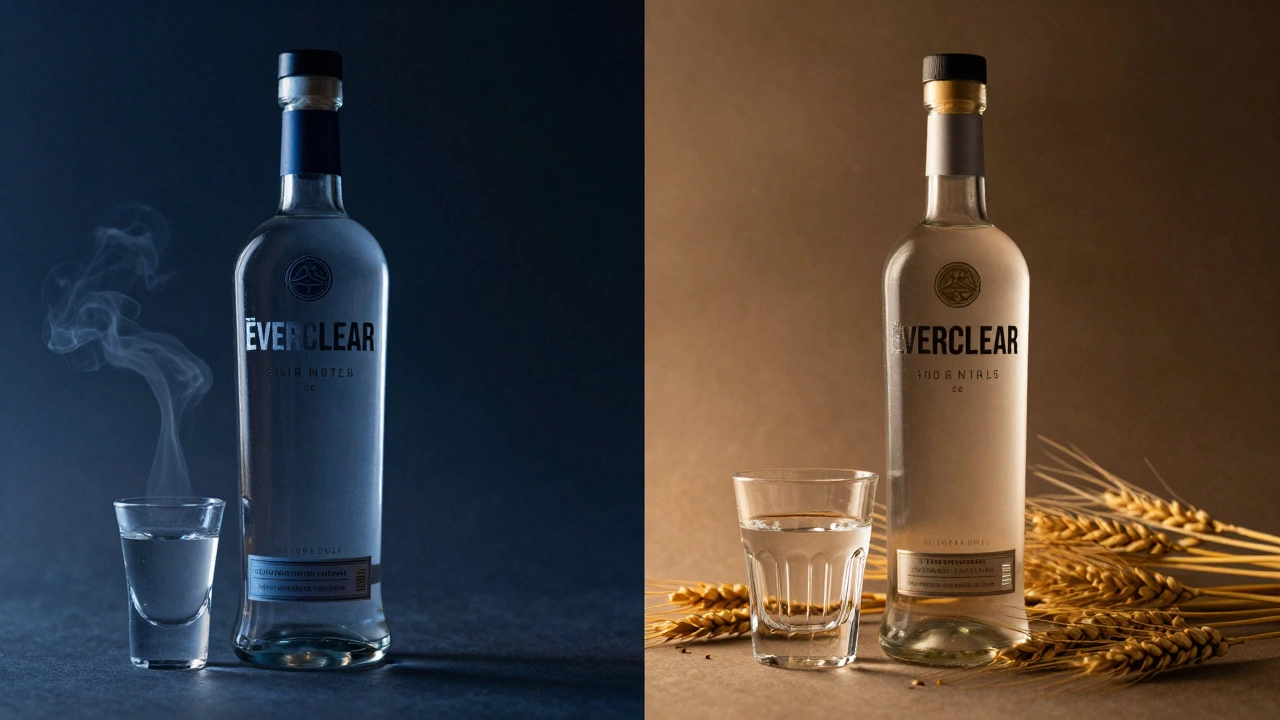
In the consumer market, the most famous example of this is Everclear. Produced by Luxco since 1950, Everclear comes in two strengths: 151 proof (75.5% ABV) and 190 proof (95% ABV). The 190-proof version is banned in several U.S. states due to safety concerns, but where available, it is the benchmark for neutrality. Drinkers and mixologists use it not because it tastes good on its own, but because it adds alcohol content without altering the flavor of a cocktail or infusion. It tastes like "fire" because it is nearly pure ethanol.
Vodka: The Consumer-Friendly Neutral Spirit
For most people, drinking 95% ABV liquid is dangerous and unpleasant. This is where Vodka fits in. Legally and stylistically, vodka is defined as a neutral spirit filtered to remove distinctive character, usually bottled at 40% ABV (80 proof).
Think of vodka as diluted rectified spirit. Distillers start with GNS, dilute it with water, and filter it again to ensure smoothness. Because it is lower strength, the burning sensation is manageable, allowing your palate to detect the subtle differences between brands. However, the goal remains the same: minimal flavor.
Does all vodka taste the same? Not quite. While they all taste primarily of ethanol and water, the base ingredient leaves a faint fingerprint:
- Wheat Vodka: Often has a slight cereal sweetness and a softer mouthfeel.
- Rye Vodka: Can have a tiny hint of spice or peppery bite.
- Potato Vodka: Tends to feel creamier or oilier on the tongue.
Despite these nuances, a high-quality vodka will taste significantly more like "pure spirit" than any other mainstream liquor. Cheap vodkas, however, often fail here. They contain impurities that taste like turpentine or rubbing alcohol, which masks the clean ethanol flavor with harsh off-notes. A premium vodka tastes like clean fire; a bad one tastes like chemicals.
Why Other Clear Spirits Do Not Taste Like "Spirit"
You might assume that other clear liquors like gin or white rum are similar to vodka. They are not. While they may start with a neutral base, their legal definitions require them to have distinct flavors that overpower the ethanol taste.
| Spirit Type | Base Ingredient | Dominant Flavor Notes | Closeness to Pure Ethanol |
|---|---|---|---|
| Rectified Spirit / GNS | Grain/Potato/Sugar | Burning, Bitter, Sweet (Ethanol only) | 10/10 (Highest) |
| Vodka | Wheat/Rye/Potato/Grape | Mild heat, faint substrate sweetness | 9/10 |
| Gin | Neutral Spirit + Botanicals | Juniper, Citrus, Herbs | 3/10 |
| Blanco Tequila | Blue Agave | Vegetal, Peppery, Earthy | 2/10 |
| White Rum | Molasses/Cane Juice | Light Molasses, Vanilla, Fruit | 4/10 |
Gin is legally required to be flavored with juniper berries. When you drink gin, you are tasting herbs layered over alcohol. Many describe it as "rubbing alcohol with pine needles." Blanco Tequila is made from agave, giving it a strong green, vegetal, and spicy profile that completely masks the neutral spirit underneath. Even White Rum, while lighter than aged rums, carries notes of molasses and tropical fruit that distinguish it from pure ethanol.
The Science Behind the "Burn"
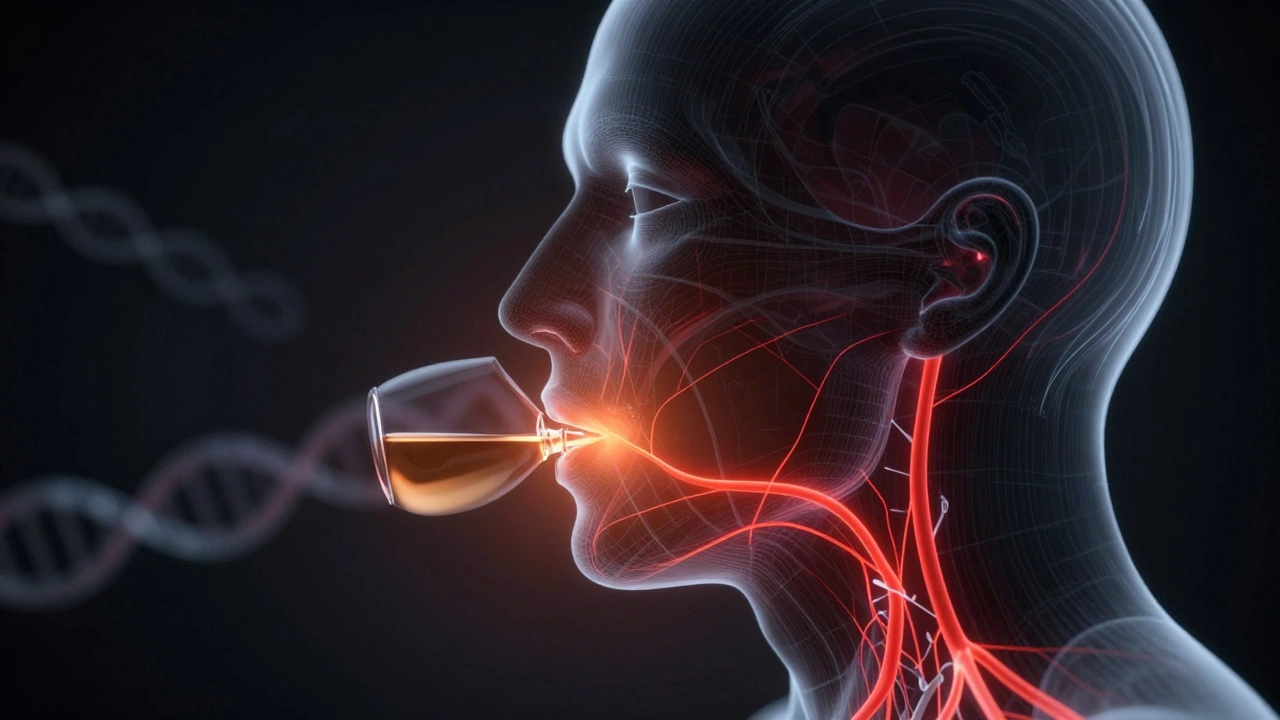
Why does ethanol taste the way it does? It is not just about taste buds. A 2014 study published by Penn State University found that the perception of ethanol’s bitterness and burning sensation is heavily influenced by genetics. Specifically, variations in the TAS2R38 bitter taste receptor gene and TRPV1 heat-pain receptors determine whether you perceive 16% ethanol solutions as "warm and sweet" or "bitter and burning."
This explains why two people can drink the same shot of vodka and have different experiences. For some, the ethanol taste is a pleasant warmth; for others, it is an aggressive burn. Furthermore, research shows that as ABV increases, the trigeminal nerve response (the feeling of heat and irritation) dominates over actual taste. This is why spirits above 40% ABV often taste "just like alcohol"-the physical sensation of heat overwhelms your ability to detect subtle flavors.
Safety and Consumption Warnings
If you are seeking the taste of pure spirit, you must respect the potency. Rectified spirits like Everclear 190 proof contain roughly 73 grams of pure ethanol in a single 44 ml shot. That is equivalent to three or four standard drinks in one go. Consuming this neat leads to rapid intoxication and poses a serious risk of alcohol poisoning.
Public health guidelines define a standard drink as containing about 14 grams of pure alcohol. A shot of 40% vodka contains about 17 grams. A shot of 95% GNS contains nearly five times that amount. Never drink high-proof neutral spirits straight. They are intended for dilution, cooking, or making infusions where the alcohol is reduced or masked.
Summary: What Should You Buy?
If your goal is to taste the essence of spirit:
- For maximum purity: Buy Everclear 190 Proof or generic Grain Neutral Spirit. Expect intense burn and zero flavor. Use extreme caution.
- For a drinkable experience: Buy a high-quality, unflavored Vodka. Look for wheat-based options if you want a smoother, sweeter ethanol profile, or potato-based for a richer texture. Avoid cheap brands that taste harsh and chemical.
Avoid gin, tequila, and rum if you want neutrality. They are delicious, but they are designed to taste like plants, not like alcohol.
Does vodka taste like rubbing alcohol?
High-quality vodka should not taste like rubbing alcohol. Rubbing alcohol is isopropanol, which is toxic and has a distinct chemical odor. However, low-quality or poorly distilled vodka can have impurities that create a harsh, chemical burn similar to solvents. Premium vodka tastes like clean ethanol and water, with a smooth finish.
What is the difference between vodka and grain neutral spirit?
The main differences are proof and filtration. Grain Neutral Spirit (GNS) is typically distilled to at least 95% ABV and is virtually flavorless. Vodka is usually made from GNS, diluted to around 40% ABV, and filtered again to improve mouthfeel. Vodka is meant to be consumed as a beverage, while GNS is often used as a base for other products.
Is Everclear safe to drink?
Everclear is safe to consume in moderation, but it is extremely potent. Drinking it neat is dangerous due to the high alcohol content (up to 95% ABV). It is best used for mixing cocktails, making moonshine-style infusions, or baking, where it is diluted or cooked down. Always follow local laws, as it is banned in some regions.
Why does ethanol taste sweet and bitter at the same time?
Ethanol interacts with multiple sensory receptors. It stimulates sweet taste receptors, which is why some people enjoy the taste of pure alcohol. Simultaneously, it activates bitter receptors and trigeminal nerves (which sense heat and pain), creating a burning sensation. Your genetic makeup determines which sensation is more dominant for you.
Which alcohol has the least flavor?
Rectified spirit or Grain Neutral Spirit (GNS) has the absolute least flavor, followed closely by high-quality vodka. These spirits are distilled and filtered specifically to remove congeners (flavor compounds). Other clear spirits like gin or white rum have added botanicals or sugar cane notes that give them distinct flavors.


Categories