Oktoberfest Beer Budget Calculator
- Cost per Beer (Maßkrug): €13.90
- Daily Beer Cost: --
- Total Trip Beer Cost: --
- Total Volume Consumed: -- Liters
Enter your details to see a fun fact!
You might be wondering what the big deal is about that massive party in Germany every autumn. If you have ever heard of a place where millions of people gather to drink beer, eat giant chickens, and wear traditional lederhosen, you are thinking of Oktoberfest, which is the largest beer festival in the world held annually in Munich. It is not just a drinking contest; it is a cultural phenomenon that has been running for over two centuries. Whether you are planning a trip or just curious about the hype, understanding what makes this event so unique requires looking beyond the stereotypes.
The Origin Story: From Royal Wedding to Global Icon
It all started with a wedding. On October 12, 1810, Crown Prince Ludwig of Bavaria married Princess Therese von Sachsen-Hildburghausen. To celebrate, the citizens of Munich were invited to a public celebration featuring horse races on a meadow near the city gates. That meadow, named after the princess, became known as Theresienwiese, commonly referred to as die Wiesn. The event was such a hit that it was repeated the following year, and soon enough, the horse races evolved into a full-blown folk festival.
For decades, it remained a local affair. But as brewing technology improved and travel became easier, the festival grew. By the late 19th century, breweries began setting up large tents to serve their wares directly to the crowds. This shift turned the event into the beer-centric extravaganza we know today. Interestingly, despite the name, the festival usually starts in mid-September and ends on the first Sunday in October. If that Sunday falls before October 3rd, it extends to October 3rd, which is Bavaria’s state holiday. So, while it is called Oktoberfest, most of the action happens in September.
Scale and Scope: Why It Is the Largest
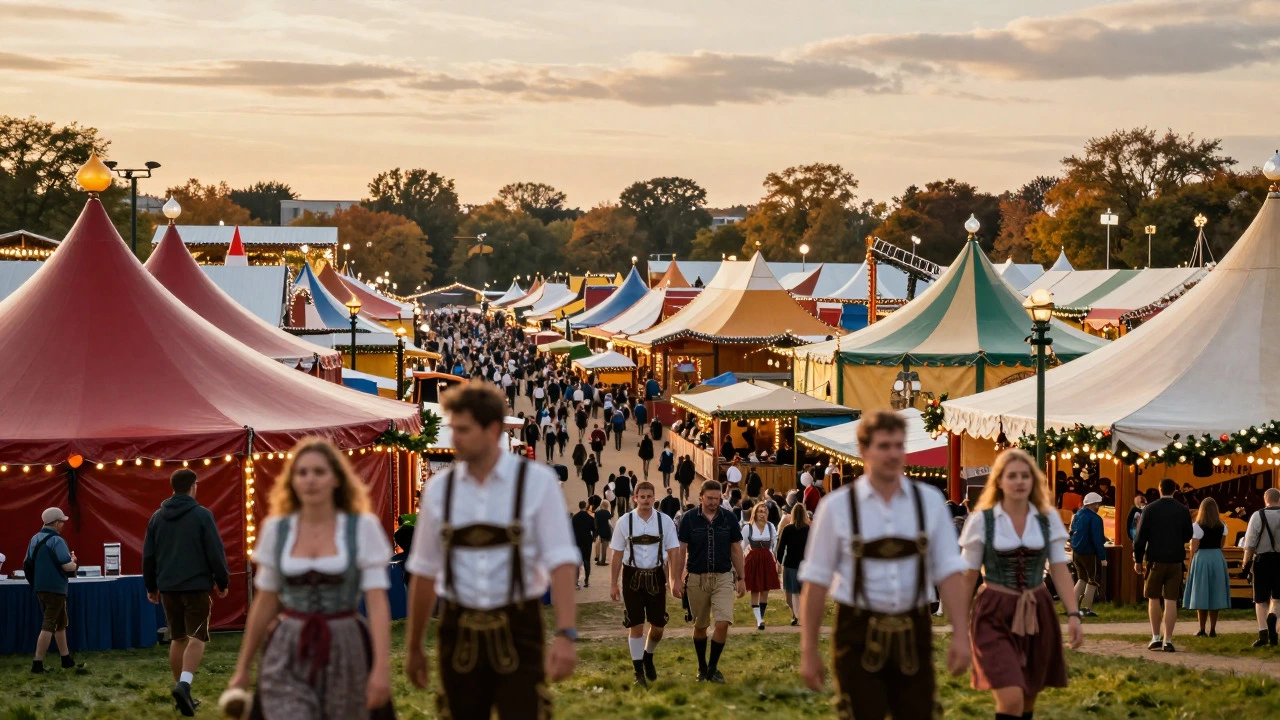
When we say "largest," we mean it in every sense of the word. The festival grounds cover approximately 42 hectares (about 104 acres). That is huge. To put it in perspective, that is roughly 60 football pitches packed with tents, rides, and food stalls. Every year, between 6 million and 7 million visitors flock to Munich for this event. In recent years, attendance has hovered around 6.5 million people. Imagine a small country’s population moving through one city square over the course of 16 to 18 days.
| Metric | Value |
|---|---|
| Annual Visitors | Approximately 6.5 million |
| Beer Consumed | Roughly 7.5 million litres |
| Duration | 16-18 days (Mid-Sept to Early Oct) |
| Area Size | ~42 hectares (104 acres) |
| Large Tents | 14-18 major brewery tents |
The sheer volume of beer consumed is staggering. Each year, attendees drink about 7.5 million litres of beer. That averages out to more than one litre per person, but remember, many visitors only attend for a few hours, while others stay for days. The beer is served exclusively from ten specific Munich breweries that meet strict criteria. These include giants like Paulaner, Hofbräu, and Augustiner. No other beer can be served in the main tents unless it is brewed within the city limits of Munich and adheres to the Reinheitsgebot, the German Beer Purity Law of 1516.
The Experience: Tents, Food, and Tradition
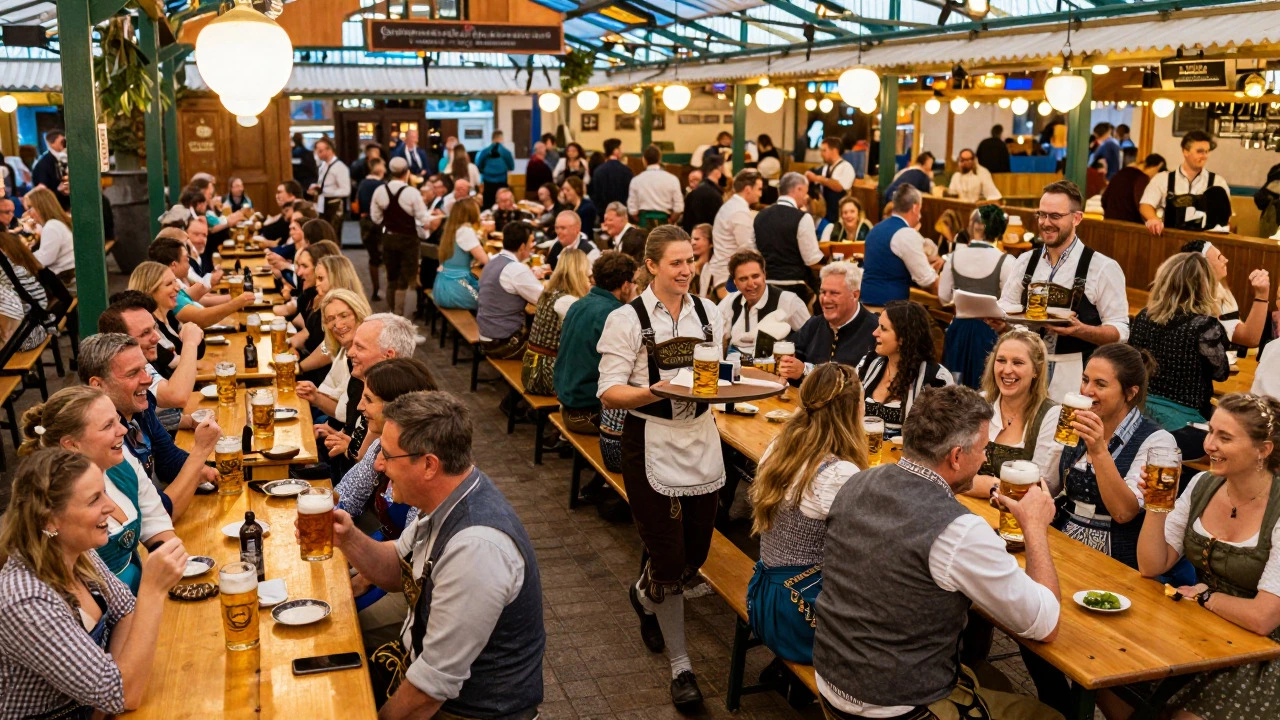
Walking onto the Theresienwiese is an assault on the senses in the best way possible. The air is filled with the sound of oompah bands playing traditional Bavarian music, the smell of roasted chicken, and the sight of thousands of people dressed in dirndls and lederhosen. The heart of the festival consists of the large beer tents. There are typically 14 to 18 of these massive structures, each operated by a different brewery. They can hold anywhere from 5,000 to 10,000 guests. Sitting at one of the long wooden tables, sharing a meal and drinks with strangers who quickly become friends, is the quintessential Oktoberfest experience.
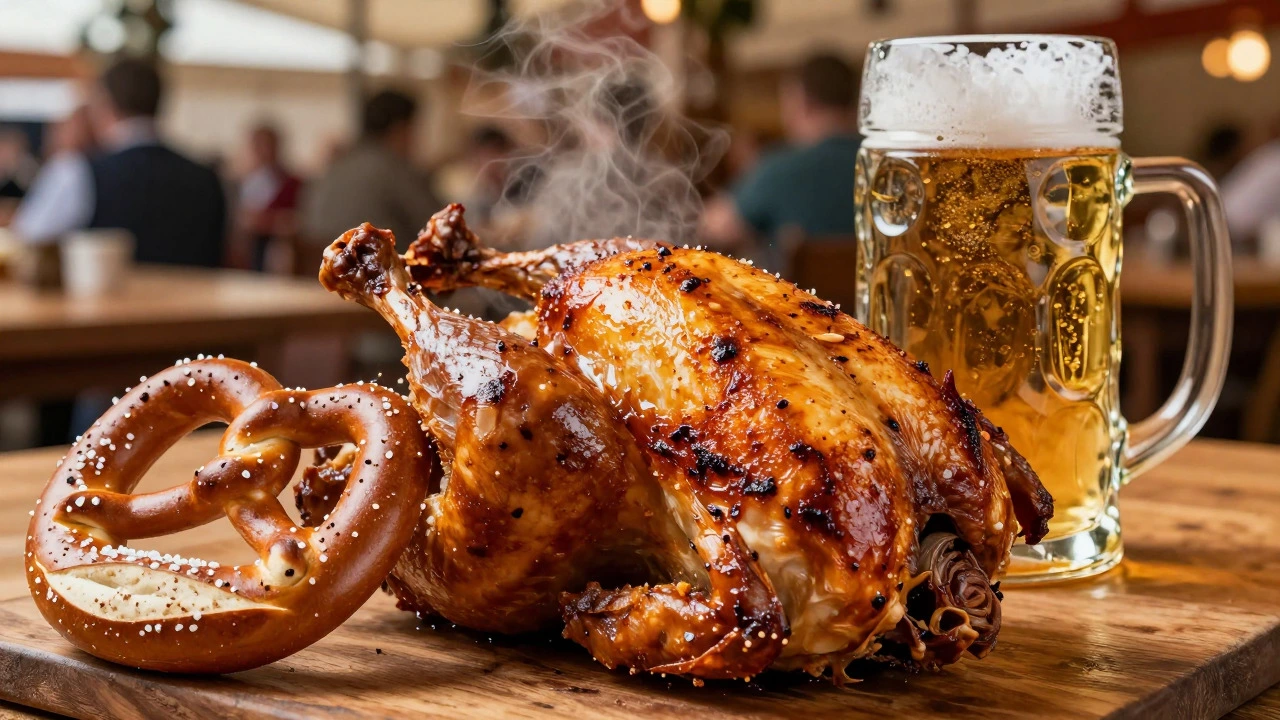
But it is not just about beer. The food is a major draw. You cannot visit without trying the Hendl, which is roast chicken, a staple dish at Oktoberfest. Over 400,000 roast chickens are consumed during the festival. Other popular items include pork knuckles, pretzels, and sausages. The combination of hearty food and strong beer creates a festive atmosphere that feels both communal and celebratory.
Beyond the beer tents, there is a massive traveling funfair with roller coasters and carousels. This adds a family-friendly dimension to the event, although the alcohol consumption remains the primary focus for adults. There is also the Oide Wiesn (Old Wiesn), a nostalgic area that recreates the festival as it looked in the early 20th century. Entry here costs a small fee, unlike the rest of the festival grounds which are free to enter.
Practical Tips for Attending
If you are thinking about going, you need to plan ahead. Accommodation in Munich books up months in advance, and prices skyrocket during the festival period. Hotels outside the city center or even in neighboring towns are often necessary. Public transport is efficient, but expect crowds. The subway and buses run frequently, sometimes extending their hours to accommodate late-night revelers.
One common misconception is that you need a ticket to get into the beer tents. For the most part, entry is free. However, seating is limited. If you want to guarantee a spot in a popular tent like the Hofbräu-Festzelt, you should make a reservation weeks or even months in advance. Without a reservation, you can still sit if there is space, especially earlier in the day or later in the evening when crowds thin out slightly. Standing room is always available, and you can enjoy the atmosphere without a seat.
Dress code is another important consideration. While you do not have to wear traditional Bavarian clothing, doing so enhances the experience and helps you blend in. Dirndls for women and lederhosen for men are widely worn by locals and tourists alike. Dressing appropriately shows respect for the tradition and often earns you warmer welcomes from the waitstaff, known as Wiesngschäftler, who are famous for their efficiency and strength in carrying multiple Maßkrüge (one-litre beer mugs) at once.
Safety and Etiquette
Despite its size and reputation for heavy drinking, Oktoberfest is generally very safe. The police presence is significant, and medical teams are on standby throughout the grounds. The biggest risks are usually minor issues like lost wallets or mild intoxication. However, etiquette matters. Table songs, or Tischlieder, are a cherished tradition. When a band starts playing a song, everyone joins in. It is polite to participate, even if you do not know the words. Interrupting a toast or being rude to fellow tablemates is frowned upon. The spirit of Gemütlichkeit-a German concept meaning coziness, friendliness, and good cheer-prevails.
Also, keep your belongings close. With hundreds of thousands of people moving through the tents daily, pickpocketing can occur. Use cross-body bags and keep valuables secure. And remember, while the beer is strong (usually around 5.8% ABV), pacing yourself is key. The Maßkrug is a litre of beer, which is equivalent to four standard pints. Drinking one quickly is not recommended if you want to enjoy the entire weekend.
Why It Remains Unmatched
Other cities have beer festivals, certainly. Boston, Canberra, and Sydney all host events with similar themes. But none compare to the scale, history, and authenticity of Oktoberfest. The deep connection between the festival and the city of Munich is unique. It is not a commercial invention but a genuine expression of local identity. The breweries take pride in their heritage, the citizens embrace the tradition, and the visitors come to share in that joy. It is a living piece of history that continues to evolve while staying true to its roots.
In 2026, the 191st Oktoberfest will take place from September 19 to October 4. As with previous years, it will attract millions from around the globe, reinforcing its status as the undisputed king of beer festivals. Whether you are a beer enthusiast, a culture seeker, or just someone looking for a memorable adventure, Oktoberfest offers something for everyone. Just be prepared for the noise, the crowds, and the incredible energy that defines this world-famous event.
What is the official name of the largest beer festival in Munich?
The official name is Oktoberfest. It is organized by the City of Munich and takes place on the Theresienwiese fairground.
How much does it cost to enter Oktoberfest?
Entry to the main festival grounds and beer tents is free. However, the Oide Wiesn (Old Wiesn) section charges a small entrance fee, typically around €4. Rides and attractions require separate tickets.
Which beers are served at Oktoberfest?
Only beers brewed by member breweries of the Munich Brewers’ Association within the city limits are served. These include brands like Paulaner, Hofbräu, Augustiner, Spaten, Hacker-Pschorr, Löwenbräu, and others. All must comply with the Reinheitsgebot.
Do I need a reservation to sit in a beer tent?
Reservations are highly recommended for lunchtimes and peak hours, especially in large tents. You can book tables online or via phone weeks in advance. Without a reservation, you may find standing room or empty seats later in the evening.
When is the best time to visit Oktoberfest?
The first week is often the most crowded, including the opening ceremony. The last few days can also be busy. Mid-festival weekdays tend to be slightly less crowded. Avoid weekends if you prefer smaller crowds, though the atmosphere is vibrant then.
Is Oktoberfest family-friendly?
Yes, families are welcome, especially during the day. There are dedicated family areas, children’s rides, and non-alcoholic options. However, the beer tents are adult-oriented, and some tents restrict entry for young children after certain hours.
Categories